
How to Buy a Newsletter: Subscribers, Revenue and Deliverability
Subscribers, revenue and deliverability: what to check before you buy a newsletter, how it's valued and how to move the list and the platform to you.

A newsletter is one of the few audiences online you can actually own. Readers asked to hear from you, the platform can’t hide your posts behind an algorithm, and every issue lands in an inbox. That’s why more creators, media companies and investors now choose to buy a newsletter instead of building one from zero.
But a list is only as valuable as the people on it who still open, read and click. A newsletter with a big number and a quiet audience can be worth less than a small one with readers who reply to every issue. This guide shows you how to tell the difference, and how to complete the purchase so the readers, the sponsors and the sending reputation all come with you.
You’ll learn what to check in the numbers, how consent and deliverability affect value, how newsletters are priced, how to pay safely and how to move the publication on platforms such as Substack, beehiiv and Kit.
Key takeaways
- Judge engagement, not size: unique clicks, replies and steady growth matter more than total subscribers.
- Ask how every subscriber joined. Opted-in readers are an asset; imported or bought contacts are a liability.
- Check deliverability: bounces, spam complaints and whether the sending domain is set up properly.
- Price on average monthly profit for earning newsletters, and on engaged readers and niche for the rest.
- Use the platform’s own transfer process where it exists, and pay through escrow until the handover is done.
Why buy a newsletter?
Growing a newsletter is slow. Most new newsletters spend months winning their first few hundred readers, and many stop before they reach a size that sponsors care about. Buying one gives you:
- An owned audience that isn’t at the mercy of social media algorithms.
- Income from day one if the newsletter has sponsors, paid subscribers or affiliate revenue.
- A proven format: you can see what readers open and click, which takes the guesswork out of the content.
- A distribution channel for your other products, from courses to software.
The best purchases are newsletters built around a topic and a format rather than one writer’s personality, because those carry over to a new author well. If readers subscribed to hear from a specific person, plan a careful transition, or expect some of them to leave.
Step 1: Decide what kind of newsletter you want
Newsletters earn in very different ways, and each needs a different kind of owner:
- Sponsored newsletters sell ad slots to brands. Value depends on audience size, niche and click rates. See newsletter sponsorship revenue.
- Paid newsletters charge readers a subscription. Value depends on paid subscribers, churn and how much of the content depends on the writer.
- Affiliate and product newsletters earn by recommending products or selling their own.
- Free newsletters with no income yet are bought for the audience and the potential.
Newsletters often sit next to communities, and many buyers acquire both. If that interests you, our guides to buying a Discord server, buying a Telegram channel and paid communities for sale cover the differences.
Step 2: Check engagement, not just size
Ask for a live screen share of the platform’s dashboard, or read-only access, covering at least the last 12 months. Then look at:
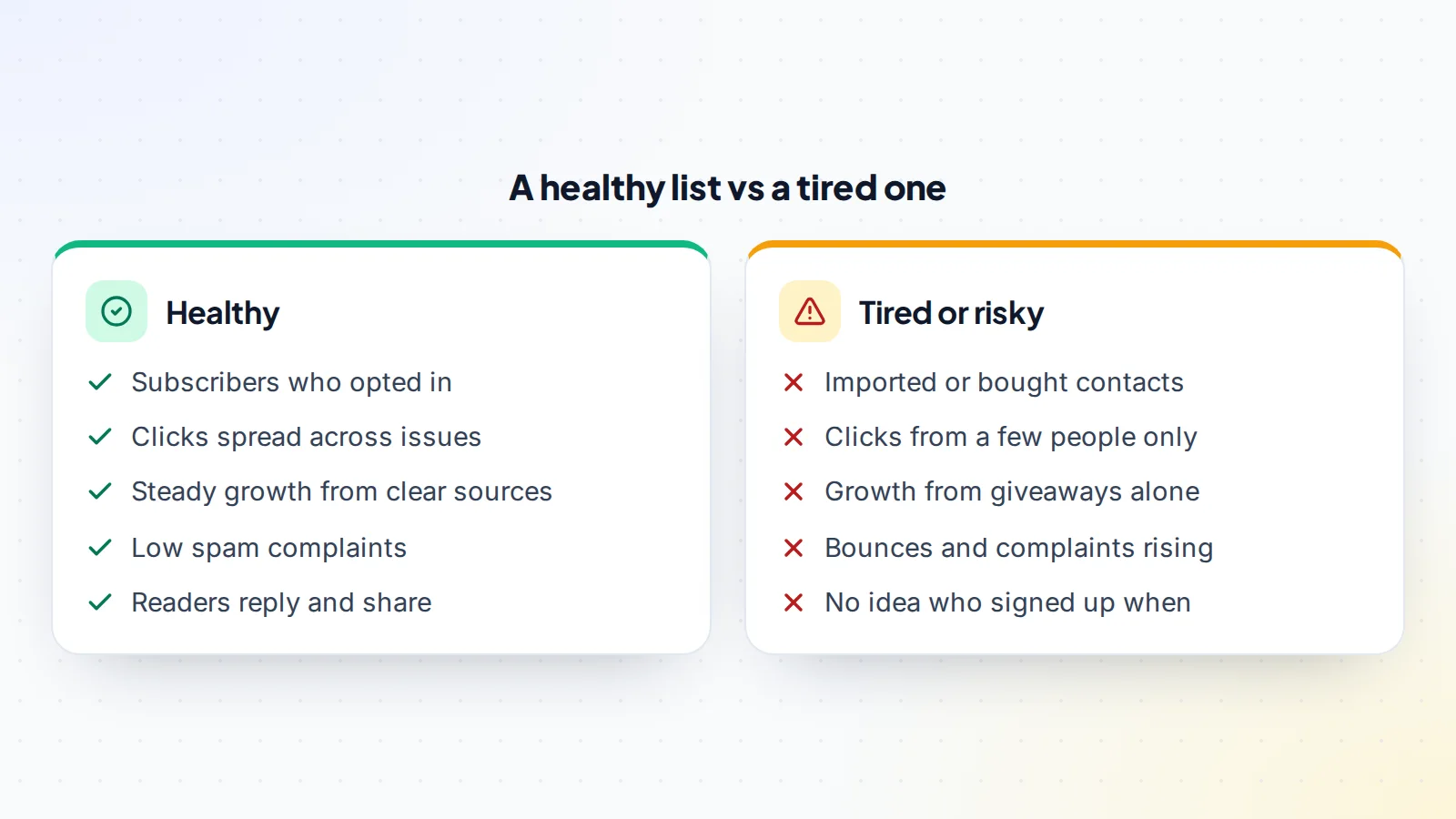
- Unique clicks per issue. Open rates have become less reliable since some email apps load images automatically, so clicks and replies are better signs of real attention.
- Trends: are clicks per issue stable, rising or falling as the list grows?
- Growth sources: organic sign-ups, referrals, social posts, paid growth tools or giveaways. Growth from giveaways alone tends to bring readers who never engage.
- Unsubscribes and complaints per issue.
- Replies and shares, which show a relationship rather than a habit.
Our guide to community engagement metrics explains which numbers to compare, and newsletter valuation shows how they affect price.
Step 3: Confirm how subscribers joined
Consent isn’t paperwork; it’s the foundation of the asset. Ask how every part of the list was collected: sign-up forms, referrals, imports from older tools, co-registrations or giveaways. You want readers who chose to subscribe to this newsletter.
Rules depend on where your readers live. In the United States, the FTC’s CAN-SPAM guidance requires commercial emails to include a valid postal address and a clear way to opt out, and opt-outs must be honoured within 10 business days. Readers in the European Union are covered by the GDPR, which affects how their data can move to a new owner. Our guide to transferring email subscribers under the GDPR covers what to agree with the seller.
Never buy a list that was bought, scraped or imported without consent. Besides the legal risk, mailing people who never asked damages deliverability for everyone else on the list.
Step 4: Check deliverability
A newsletter is only valuable if it reaches the inbox. Google’s sender guidelines say that anyone sending more than 5,000 messages a day to Gmail accounts must set up SPF, DKIM and DMARC for their sending domain, and that marketing and subscribed messages must support one-click unsubscribe. Even smaller senders benefit from the same setup.
Ask the seller about:
- Bounce rates and spam complaint rates over time.
- Whether the newsletter sends from its own domain, and how that domain is authenticated.
- Any deliverability problems in the past and how they were fixed.
- How inactive subscribers are handled (many good newsletters remove readers who haven’t engaged in months).
Our email deliverability check walks you through each point.
Step 5: Verify the income
For sponsored newsletters, ask for the sponsor list and invoices for the last 12 months, matched to payments. Find out which sponsors book directly, which come through an ad network and which are likely to keep booking after the sale. For paid newsletters, look at paid subscribers by month, churn, refunds and the share of annual plans. Then list every cost: platform fees, writers, editors, design and growth tools.
Read the issues and understand the workload
Read at least the last 20 issues. You’re checking two things: whether you can keep producing something readers value, and how much work that takes. Ask the seller for their process: how topics are chosen, how long each issue takes, whether freelancers contribute and what tools are used. A newsletter that takes ten hours a week and depends on the seller’s industry contacts is a very different job from one built on curated links and a clear template. Our guide to engagement metrics shows which issues to study for the strongest signals of what readers want.
Step 6: Value the newsletter
Earning newsletters are usually priced as a multiple of average monthly net profit, like other online businesses. Newsletters without income are priced on engaged readers, niche and growth. The multiple rises with steady growth, strong clicks, repeat sponsors, clean consent and a format that doesn’t rely on one writer. It falls with weak engagement, a list grown through giveaways, deliverability problems or income tied to the seller personally. Read how much a newsletter is worth, and try the free valuation tool for a quick range.
Red flags in newsletter listings
- Subscriber counts with no engagement data. If the seller won’t show clicks per issue, assume they’re weak.
- A sudden jump in subscribers shortly before the sale, especially from giveaways or paid co-registration.
- “Open rate” as the only proof. Opens are inflated by automatic image loading in some email apps.
- Sponsor income with no invoices, or income from one sponsor that knows the seller personally.
- Imported lists of unknown origin mixed into the subscriber base.
- Sending from a shared domain with no plan for how reputation moves to you.
A worked example
Suppose you’re looking at a weekly newsletter about personal finance for freelancers, with 18,000 subscribers. Over the last year, each issue gets around 2,500 unique clicks, unsubscribes are low and steady, and most new readers come from the website and a referral programme. Two sponsors book most weeks and have done for over a year; their invoices match the payments. The newsletter sends from its own domain with SPF, DKIM and DMARC in place.
Compare that with a newsletter twice the size, grown mostly through giveaways, with fewer clicks per issue, no invoices for the sponsor income shown, and a recent spike in complaints. On paper the second list looks bigger. In practice the first is the better asset: engaged readers, proven income and a clean sending setup. When you buy a newsletter, that’s the comparison that matters.
Step 7: Agree terms and pay safely
Write down what’s included: the publication and its archive, the subscriber list, the domain, the brand, social accounts, sponsor relationships, templates and any paid subscriptions. Agree the handover steps, an inspection period and how the seller will introduce the new owner to readers and sponsors.
Then pay through escrow or a trusted middleman, so the money is held until the handover is complete. On digiflippers.com, the ways to pay in a deal are: directly to the seller, through escrow, and the platform never holds the money itself. Read how escrow works.
Step 8: Take over the newsletter
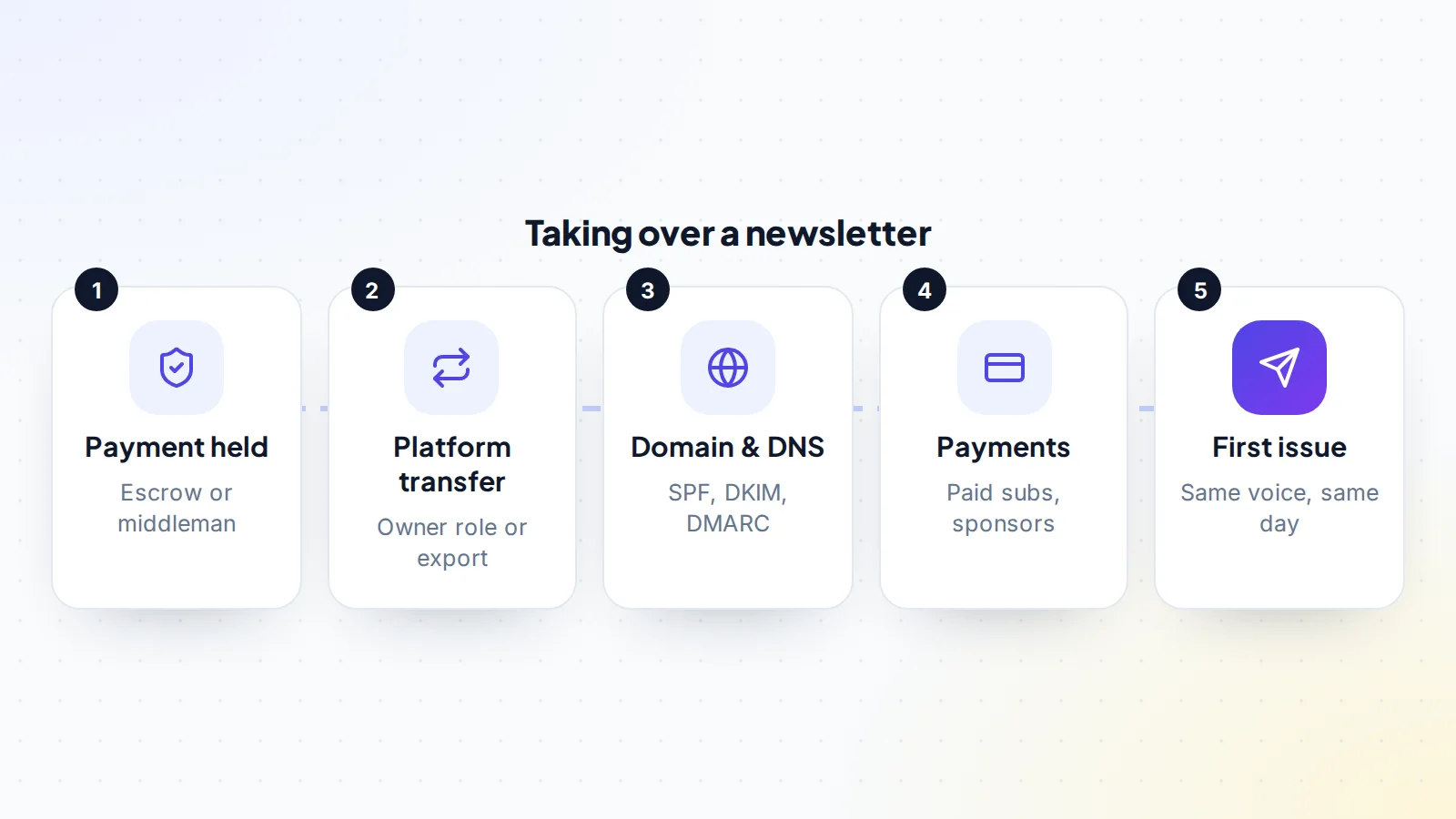
Platforms handle ownership differently. Substack’s help centre explains that the owner can transfer a publication from its settings (under “Danger Zone”, then “Transfer ownership”), and that both people must confirm before the transfer completes. beehiiv handles ownership transfers through its support team, which collects written confirmation from both the current and the new owner. Other platforms let you export subscribers and import them elsewhere. Our guide to newsletter transfers on Substack, beehiiv and Kit covers each one.
- Publication or list. Use the platform’s ownership transfer if it has one; otherwise export subscribers (with their consent records) and import them into your account.
- Domain and DNS. Move the domain and keep SPF, DKIM and DMARC records working, so sending reputation isn’t interrupted.
- Payments. Paid subscriptions and sponsor invoicing move to your payment accounts.
- Everything else: social accounts, design templates, sponsor contacts and the content calendar.
- The first issue. Keep the same format, schedule and tone. A short, honest introduction from the seller or from you helps readers stay.
Our general handover checklist covers the remaining steps.
After you buy: keep readers engaged
The weeks after a sale are when readers decide whether to stay. Send on the usual day, in the usual style, and resist big changes until you’ve seen a few issues of data. Watch clicks and unsubscribes closely. Then grow carefully: our guide to growing a newsletter covers referral programmes, recommendations and partnerships that bring engaged readers rather than empty sign-ups.
Checklist: how to buy a newsletter
- The newsletter is built around a topic and format you can continue.
- 12 months of clicks, growth, unsubscribes and complaints seen live.
- Every subscriber source explained; no bought or scraped contacts.
- Sending domain authenticated with SPF, DKIM and DMARC; bounce and complaint rates low.
- Sponsor invoices and paid subscriptions matched to payments.
- Price based on profit or engaged readers, with risks priced in.
- What’s included, handover steps and reader introduction agreed in writing.
- Payment through escrow or a middleman until the handover is done.
- Publication transferred with the platform’s own process, or list exported and imported with consent records.
- First issues sent in the same voice and on the same schedule.
Ready to find your next asset?
Browse listings with verified numbers, ask sellers your questions before you offer, and agree every step in a free Deal Room.
Browse newsletters & communities Sell your newsletter or community
Frequently asked questions
How much does it cost to buy a newsletter?
Earning newsletters are usually priced as a multiple of average monthly profit. Newsletters without income are priced on engaged readers, niche and growth. Size alone tells you very little.
Can you transfer a Substack newsletter to a new owner?
Yes. Substack’s help centre explains that the owner can start a transfer from the publication settings and that both people must confirm before it completes.
Can I move subscribers from one platform to another?
Most platforms let you export subscribers and import them elsewhere. Keep records of how and when each subscriber joined, and respect the consent they gave.
Are open rates reliable?
Less than they used to be, because some email apps load images automatically, which can count as an open. Clicks, replies and growth trends are better signals.
Will sponsors stay after the sale?
Some will, especially those who care about the audience rather than the writer. Ask the seller to introduce you before or right after the handover.
Which platform is best after I buy?
Usually the one the newsletter already uses, at least at first. Moving platforms at the same time as changing owners adds risk to deliverability and reader experience. Change later, once you know the audience.
Do I need to keep the same writer?
Not always, but plan the change. Newsletters built around a topic and format survive a new writer well; those built around one personality need a gradual, honest introduction.
Is it safe to buy an email list?
Buying a newsletter whose readers opted in is very different from buying a list of contacts. Never buy lists that were scraped or bought; they harm deliverability and can break the law.