
Where to Buy a Website: Marketplaces, Brokers and Private Deals
The main places to buy a website, how they differ in listings, vetting, fees and protection, and how to choose the right route for your budget and experience.

Websites change hands every day, but they’re not all sold in the same place. Small content sites, established e-commerce stores, SaaS products and premium brands each tend to appear in different channels, with different levels of vetting, cost and protection. Knowing where to buy a website that suits your budget and experience saves time and helps you avoid deals that aren’t what they seem. This guide compares the main routes and the checks each one needs.
Once you’ve found a site, our guide on how to buy a website takes you through the rest of the process.
Key takeaways
- Open marketplaces have the widest range, with more checking left to the buyer.
- Curated marketplaces vet listings first, usually at higher prices and with seller fees.
- Brokers manage larger sales; startup platforms focus on SaaS and apps.
- Private deals can find good opportunities but need the same protections.
- Wherever you buy, verify the numbers yourself and use protected payment.
The main places to buy
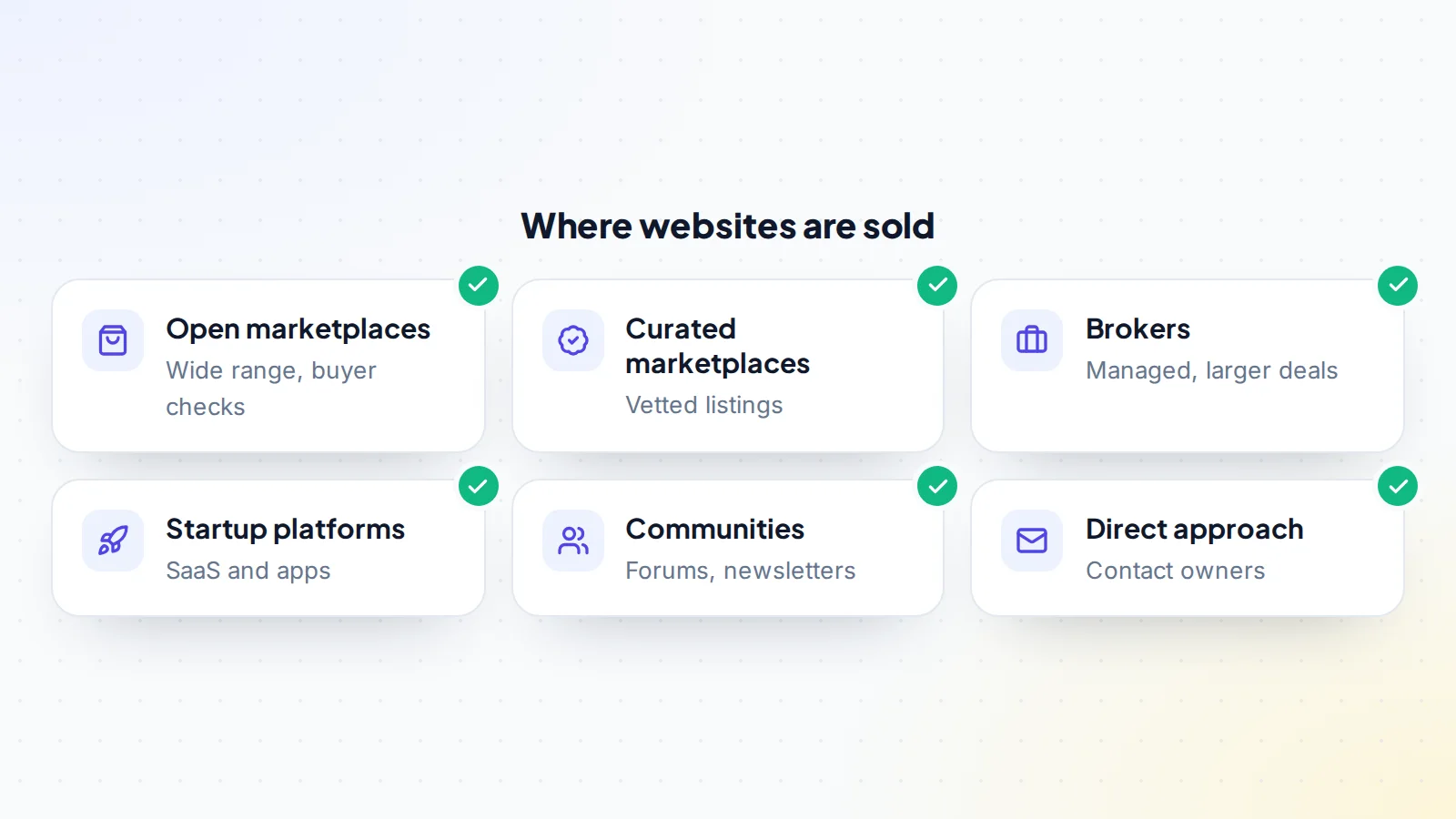
Open marketplaces
Open marketplaces list websites from many sellers, across a wide range of sizes and types. Sellers create their own listings, and buyers do most of the checking. Because anyone can list, quality varies widely. They’re a good fit for buyers who want variety, smaller deals and the chance to find undervalued sites, and who are comfortable doing due diligence. Flippa is a well-known example; according to its own pages, sellers can list as a timed auction or a classified listing. digiflippers.com is an open marketplace too, with tools such as seller verification and verified numbers to make checking easier.
Curated marketplaces
Curated marketplaces review businesses before listing them, checking revenue, traffic and ownership. Empire Flippers, for example, says it vets listings before they go live. Buyers save time on first checks, though they still need their own due diligence. Listings tend to be fewer and more established, with sellers paying a success fee that’s reflected in prices.
Brokers
Brokers manage sales for sellers, usually for larger businesses. They prepare information, market to their buyer networks and run the negotiation. Buyers get organised information and a structured process; prices reflect the size and quality of the businesses. Our guide to marketplace vs broker explains the differences.
Startup platforms
Platforms such as Acquire.com focus on SaaS, apps and startups, with structured data rooms, letters of intent and closing through escrow partners, according to its help pages. They suit buyers looking for software businesses.
Communities and direct approaches
Some sites are sold through industry communities, newsletters and forums, or privately after a buyer contacts the owner directly. These can find opportunities that never reach a marketplace, but they put all the checking, negotiation and protection on you.
Where different websites tend to appear
- Small content sites and starter sites: mostly on open marketplaces, where low prices and quick listings suit sellers.
- Established content sites and stores: on open and curated marketplaces, with larger ones through brokers.
- SaaS and apps: on startup platforms and marketplaces with software categories, and through brokers for larger deals.
- Premium brands and domains with sites: on marketplaces, domain platforms and through direct approaches.
- Niche businesses: sometimes only in niche communities or by asking owners directly.
Knowing where your target type tends to appear is the first part of answering where to buy a website for your goals.
Fees and what they mean for buyers
Most marketplace fees are paid by sellers: listing fees, success fees or both. They still matter to buyers, because sellers often build fees into asking prices. A platform where selling comes with no success fee lets sellers keep 100% of the sale price, which can make room for more realistic asking prices. Buyers may pay for escrow, part of an escrow fee, or a middleman, depending on what’s agreed. Our guide to success fees explains how they work. When comparing sources, look at the total cost to you as a buyer, including any escrow share, rather than at the platform’s headline fees.
Why prices differ between sources
The same kind of site can be priced differently depending on where it’s sold. Curated and brokered listings often come with more preparation and vetting, and the seller’s fees are usually reflected in the asking price. Open marketplaces have a wider spread: some listings are priced optimistically, others are bargains from sellers who want a quick, simple sale. Auctions add another variable, since the final price depends on who’s bidding that week. Compare like with like: similar type, size, age and income, and judge each listing on its verified numbers rather than on where it appears.
Protection and trust
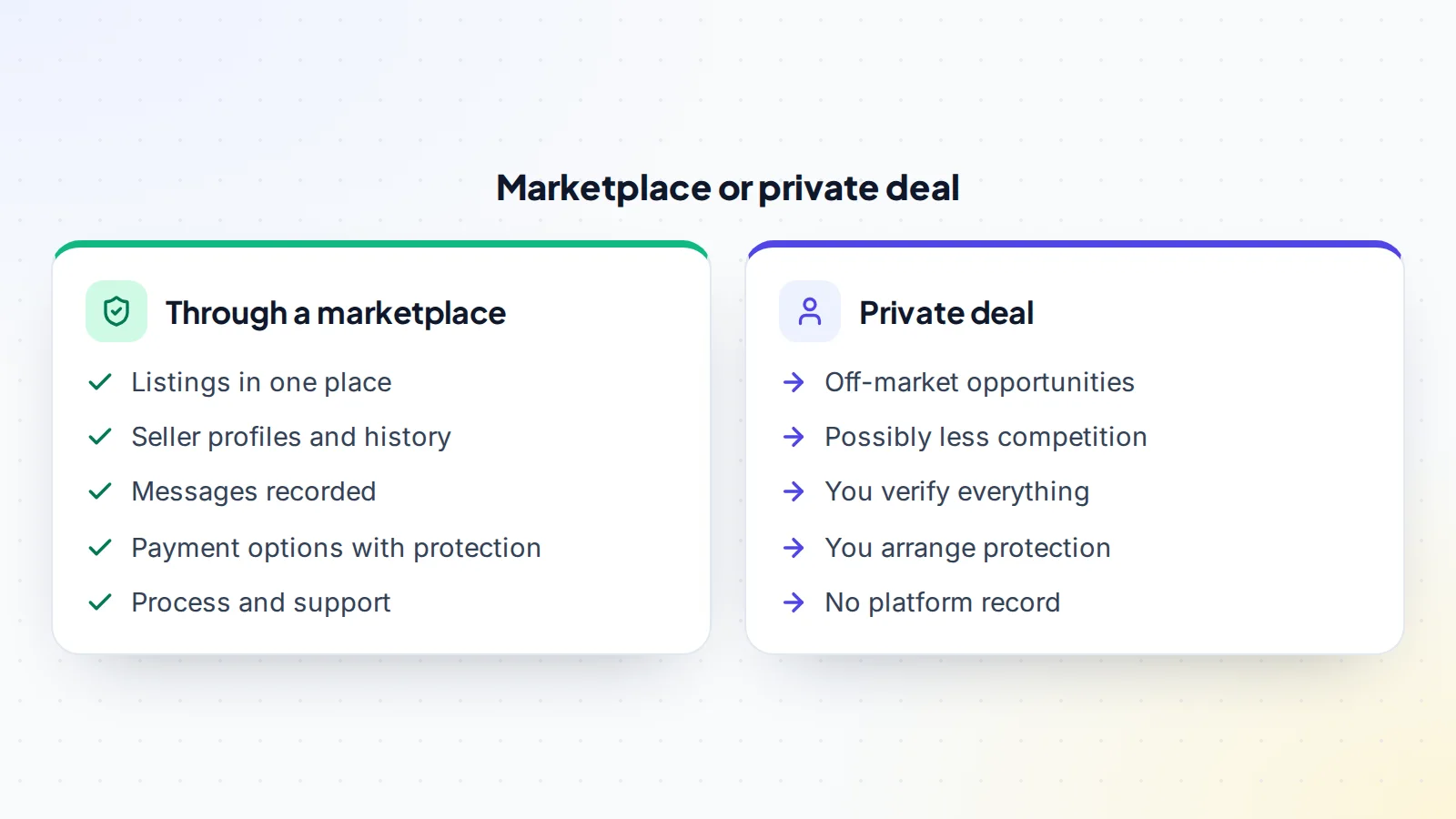
Whichever route you choose, look at how money and information are protected:
- Payment: escrow or a trusted middleman, with funds released only after you confirm the transfer.
- Identity: verified sellers and visible history.
- Data: ways to verify numbers, such as connected analytics and revenue.
- Records: messages and agreements kept on the platform.
- Disputes: a clear process if something goes wrong.
On digiflippers.com, the ways to pay in a deal are: directly to the seller, through escrow, and the platform never holds the money itself.
Buying privately
If you approach a site owner directly or find a deal through a community, treat it with the same care as a marketplace purchase. Verify the owner’s identity and their control of the site, get read-only access to analytics and revenue, agree terms in writing, and use a licensed escrow service you choose yourself. Be especially wary of anyone who approaches you with a “private” deal and insists on unusual payment methods; our guide to fake escrow scams describes the pattern.
How to choose
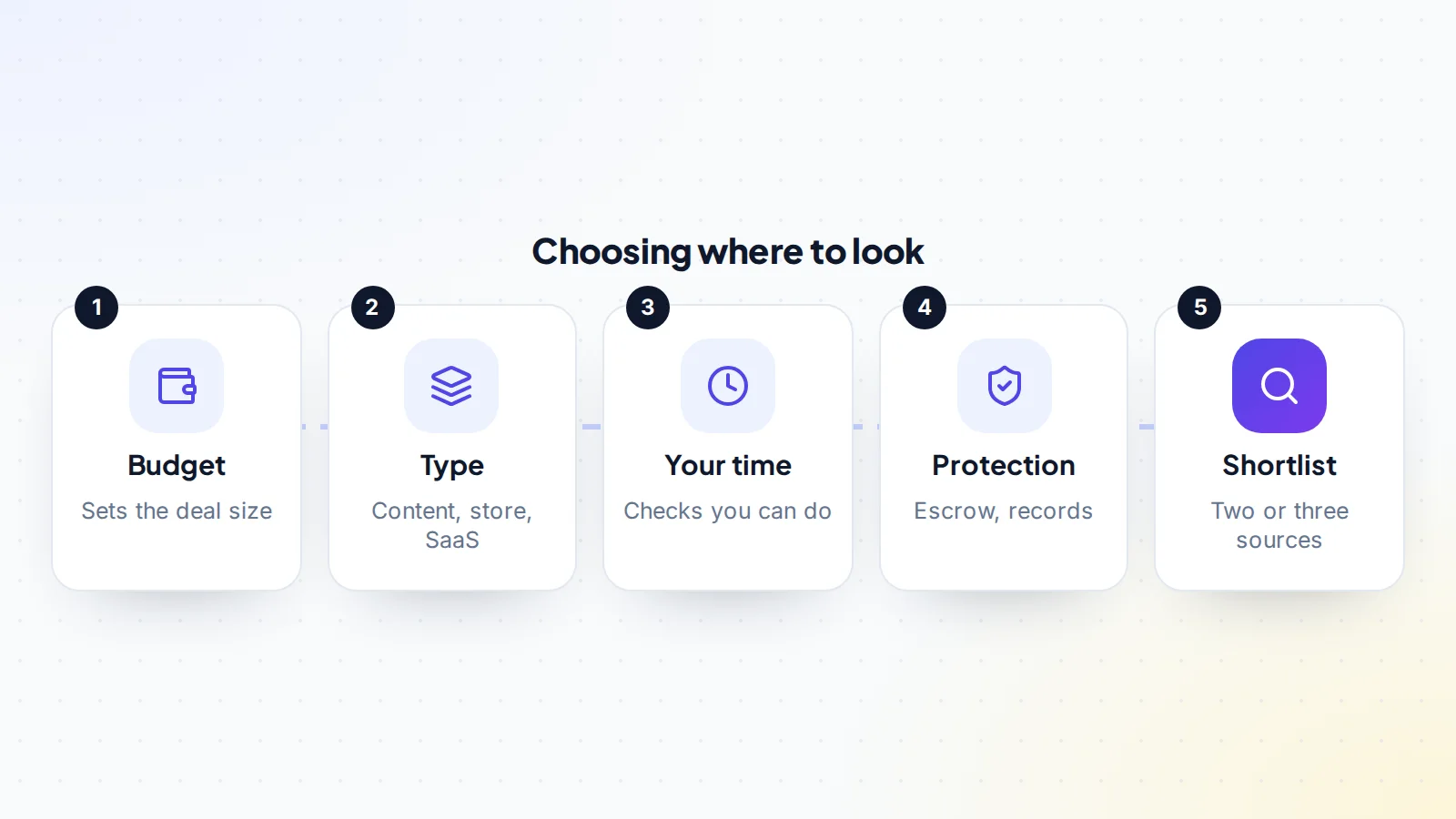
- Start with your budget. It decides which sources have suitable listings and how much help you can afford along the way; our guide to the budget for a first purchase helps.
- Pick a type: content site, store, SaaS or app. Some sources specialise.
- Be honest about your time and experience. If you can’t do deep checks, curated or brokered deals save work; if you can, open marketplaces offer more choice.
- Check the protection each source offers.
- Shortlist two or three sources and watch listings for a few weeks to learn what normal looks like.
Evaluating a listing anywhere
Whatever the source, the same checks apply: verify traffic and revenue with read-only access, look at at least twelve months of history, check where traffic and income come from, review the work involved, and understand exactly what’s included. Our guides to verifying traffic and revenue vs profit cover the numbers, and our guide to negotiating a purchase covers the offer.
Signs of a trustworthy source
- Clear, published rules for listings, fees and disputes.
- Seller verification and visible history.
- Ways to verify traffic and revenue, not just screenshots.
- Payment through licensed escrow, a trusted middleman or partners.
- Messages kept on the platform, with a support team you can reach.
A source that’s vague on any of these deserves extra caution, however attractive its listings.
Let sellers come to you
Waiting for the right listing can take time. Some marketplaces let buyers post what they’re looking for, so sellers with matching sites can contact them. On digiflippers.com, you can post a wanted request describing the type, niche and budget you have in mind. Set up saved searches or alerts where available, so new listings reach you quickly. Good sites at fair prices often sell fast.
Timing and competition
Popular listings attract several buyers, and some sellers set short deadlines. Prepare before you start looking: know your budget, have your due diligence checklist ready and line up escrow, so you can move quickly without skipping checks. Don’t let competition rush you into paying before you’ve verified the numbers; a good deal that you’ve checked is better than a fast one you haven’t.
Common mistakes
- Buying from the first source you find without comparing others.
- Assuming a curated listing needs no checks of your own.
- Moving to a private chat or payment method a seller suggests.
- Paying before verifying traffic and revenue with read-only access.
- Ignoring the time a site needs to run.
What a good listing tells you
A strong listing gives you most of what you need to decide whether to look closer: twelve months or more of revenue and profit, traffic sources and trends, the hours the site takes, what’s included in the sale, how the site makes money and why the owner is selling. Verified numbers, a seller with a history, and an offer to share read-only access are good signs. A listing with only a headline revenue figure, vague descriptions and no history should be treated as a starting point for questions, not a reason to buy.
Talking to sellers
Once a site interests you, ask the seller for a call or a detailed exchange of messages on the platform. Ask how the site grew, what they’d do next if they kept it, what problems they’ve had and what takes most of their time. Good sellers answer openly and offer access to the data. Keep the conversation on the marketplace, so there’s a record of what was said, and be polite but persistent about seeing numbers live. Our list of questions to ask when buying a business covers the essentials.
Building a portfolio
Some buyers buy more than one site over time, building a portfolio across niches or types. If that’s your plan, start with one, learn how it runs, and keep records of what you checked and what you’d do differently. Each purchase makes the next one faster and safer. Diversifying across sites with different traffic sources and income types can reduce the risk of any single change hitting everything at once.
After you’ve chosen
When you’ve found a site worth pursuing, agree the main terms in writing, carry out full due diligence, plan the handover and arrange escrow before any money moves. Then focus on the first few months: keep the site running as it was, learn how it works, and make changes gradually.
A worked example
The details below are made up to show the method.
Leah has $40,000 and some experience running a blog. Leah wants a content site in the home and garden niche, shortlists two open marketplaces and one curated marketplace, and watches listings for a month. The curated listings in that price range are few and quickly sold; the open marketplaces have more choice, with some sites Leah can check directly using read-only analytics.
Leah finds a site on an open marketplace with verified traffic and revenue, runs the checks, negotiates a fair price and pays through escrow. The route suited Leah’s budget and confidence in doing due diligence.
Where to buy a website: the checklist
- Budget and website type decided.
- Time and experience for due diligence assessed honestly.
- Two or three sources shortlisted.
- Each source’s vetting, fees and payment protection checked.
- Listings watched for a few weeks to learn normal prices.
- Numbers verified with read-only access, wherever you buy.
- Terms agreed in writing and messages kept on the platform.
- Payment through escrow or a trusted middleman.
Ready to find your next asset?
Browse listings with verified numbers, ask sellers your questions before you offer, and agree every step in a free Deal Room.
Frequently asked questions
Where is the best place to buy a website?
It depends on your budget and experience. Open marketplaces offer the widest choice; curated marketplaces and brokers do more vetting; startup platforms suit SaaS and apps.
Are curated marketplaces safer?
They vet listings first, which saves time, but you should still verify the numbers and use protected payment yourself.
Is it safe to buy a website privately?
It can be, if you verify everything, agree terms in writing and use a licensed escrow service you choose yourself.
Do buyers pay marketplace fees?
Usually sellers pay listing and success fees, though they may build them into prices. Buyers may pay for escrow or a middleman, depending on the deal.
How do I avoid scams when buying a website?
Verify the seller and their control of the site, check numbers with read-only access, keep messages on the platform and pay through escrow.
Can I buy a website on digiflippers.com?
Yes. Browse listings, check verified numbers and use protected payment options.
Where to buy a website as a first-time buyer?
Many first-time buyers start with a small site on an open marketplace with verified numbers and protected payment, so they can learn without risking too much.