How to Spot Fake Followers Before You Buy an Account
Practical checks to spot fake or inactive followers before buying an account: reach versus followers, growth curves, comment quality, follower samples and audience data.

A big follower count looks impressive in a listing, but it’s only worth something if real people are behind it and still see the posts. Some accounts have grown with bought followers, bot activity or giveaways that brought in people with no interest in the topic. Before you buy, you need to spot fake followers and inactive audiences, so you pay for the attention an account really has. This guide gives you practical checks that work on most platforms, with Instagram as the main example.
For the full buying process, see our guide to buying social media accounts.
Key takeaways
- Compare reach and engagement with the follower count, using Insights shown live.
- Look at growth over months: sudden jumps with no clear cause deserve questions.
- Read comments and sample follower profiles to judge whether people are real.
- Check that the audience’s regions and ages fit the content.
- Price on the engaged audience, not the headline number.
Why it matters
Buyers pay for attention: people who see posts, respond and sometimes buy. Followers who are bots, abandoned accounts or people who followed only to enter a giveaway add nothing to that. An account with many such followers will also show weaker reach and engagement rates than its follower count suggests, which can make it look less attractive to brands.
Bought followers are also a commercial issue. In the US, the FTC’s rule on consumer reviews and testimonials, in effect since October 2024, prohibits selling or buying fake indicators of social media influence, such as followers or views generated by bots, when the buyer knew or should have known they were fake and uses them to misrepresent influence for a commercial purpose. As a buyer, you want an audience that’s real and that you can describe honestly to partners.
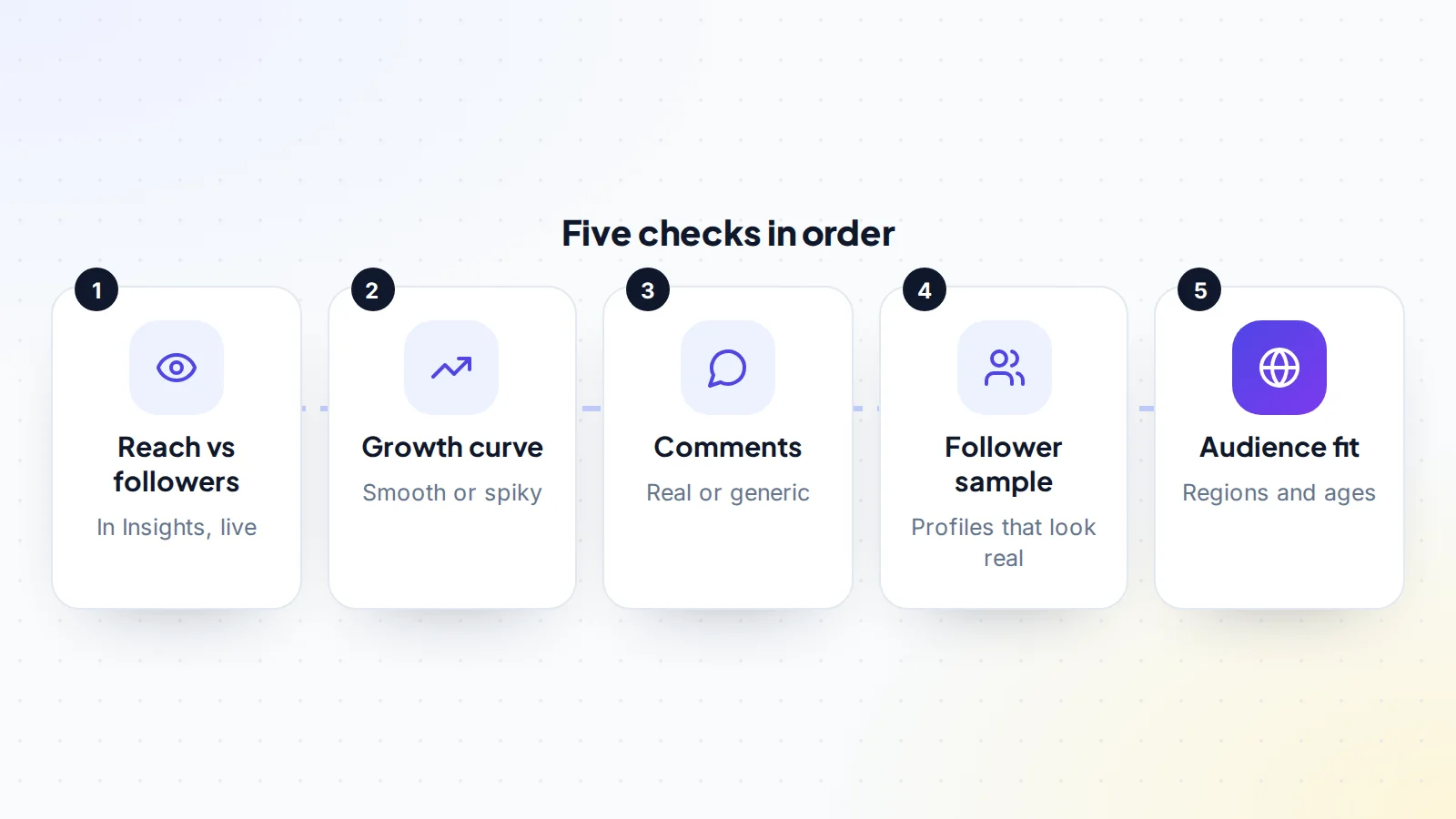
Check 1: Reach against followers
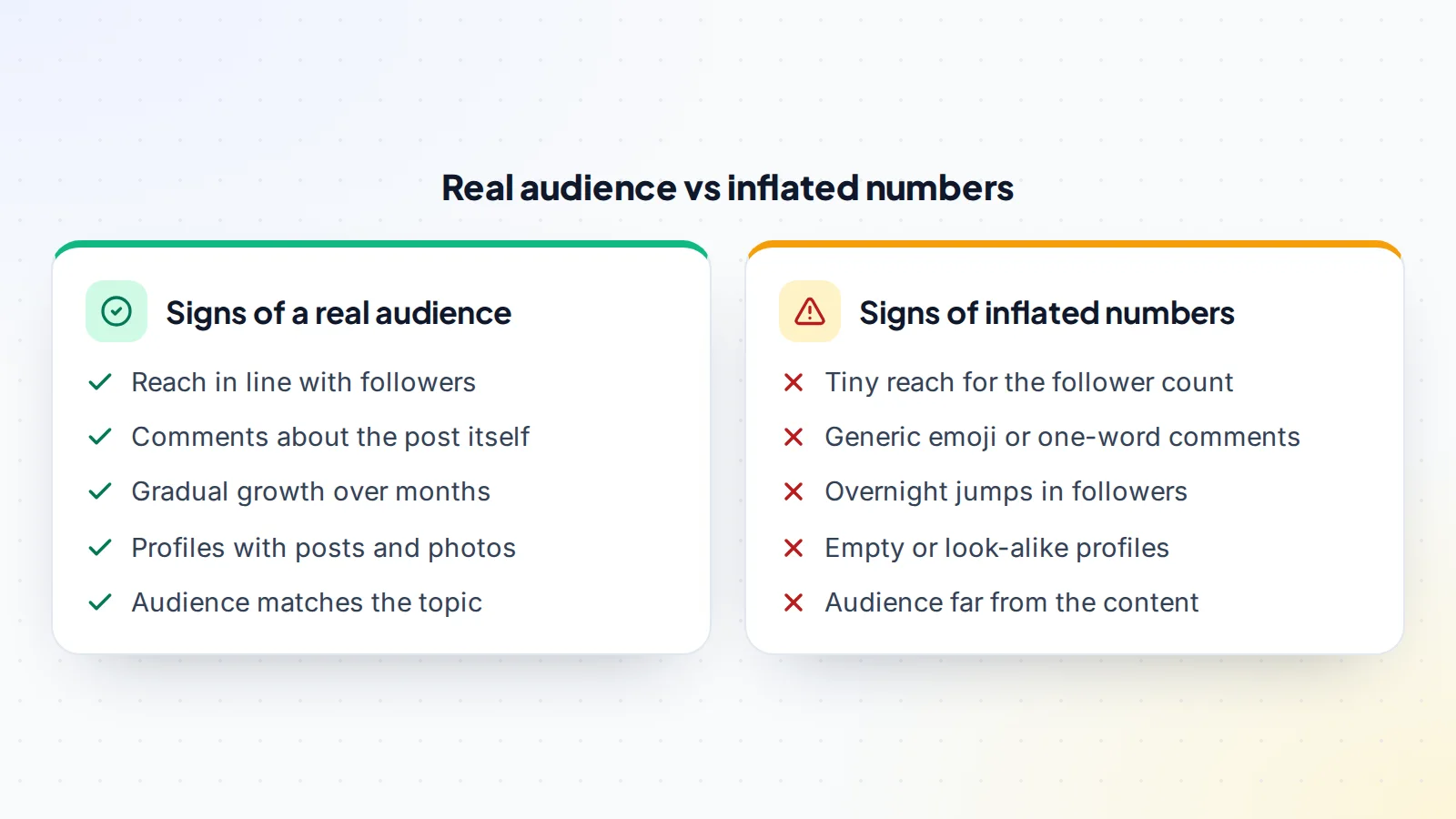
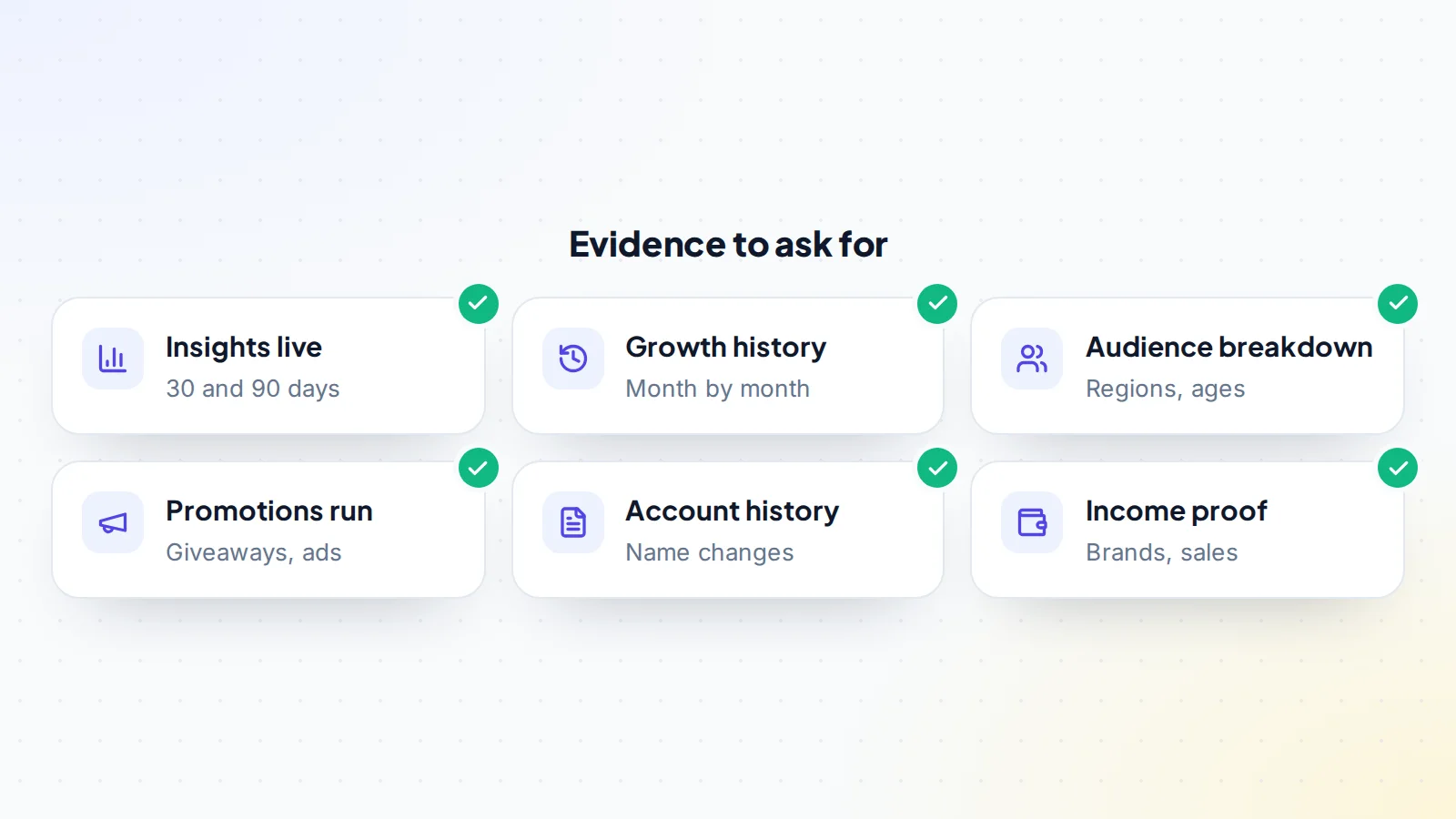
On Instagram, professional accounts have Insights showing accounts reached and accounts engaged. Ask the seller to open them on a screen-share while you watch. If an account has a large following but each post reaches only a small fraction of it, many followers may be inactive or not real. There’s no fixed “right” ratio, since reach varies by niche, format and season, so compare with similar accounts and with the account’s own history.
Also compare reach from followers with reach from non-followers where the platform shows it. Healthy accounts usually reach a solid share of their own followers.
Check 2: The growth curve
Ask for follower growth month by month for at least a year. Organic growth tends to be gradual, with bumps that line up with popular posts, collaborations or press. Sharp jumps of thousands of followers in a day or two, with nothing special posted, are a common sign of bought followers. Large drops can also be a clue, because platforms regularly remove fake accounts.
Ask the seller to explain every big change. Giveaways and paid promotions are legitimate, but they can bring in followers with little interest in the topic, so note them.
Check 3: Comments and engagement quality
Read the comments on recent posts. Real audiences ask questions, share opinions and talk about the post itself. Warning signs include:
- Lots of generic comments such as single emojis or “Nice!” on every post.
- The same few accounts commenting on everything within seconds of posting.
- Comments in languages unrelated to the content.
- Likes far out of line with comments, saves and shares.
Saves and shares, shown in Insights, are harder to fake and say a lot about genuine interest. Our guide to engagement rate explains how to measure it.
Check 4: Sample the followers
Open the follower list and look at a few dozen profiles from different points in it. Real followers usually have a profile photo, some posts, a mix of followers and following, and names that look like people or brands. Signs of fake or inactive accounts include no photo or posts, random strings of letters and numbers in names, very new accounts, and accounts that follow thousands of others but have almost no followers.
Sampling isn’t scientific, but if most of the profiles you open look empty or alike, that’s a strong signal. Look at recent followers as well as older ones, because a recent batch of empty accounts is more telling than a few old ones.
Giveaways, collaborations and shout-outs
Not every sudden rise is suspicious. A collaboration with a bigger creator, a feature in the press or a post that goes viral can all bring thousands of genuine followers in a few days. Giveaways and shout-outs are common too. The question is who those followers are and whether they stayed engaged. After a genuine spike, reach and comments usually rise as well and settle at a higher level. After bought followers or a giveaway aimed at prize-hunters, the follower count rises but reach and engagement barely move. Ask the seller for the date and cause of each spike, then look at the posts in the weeks that followed.
Stories and Reels
Different formats tell you different things. Stories are mostly seen by existing followers, so Story views are a useful signal of how many followers still pay attention. Reels can reach far beyond the follower base, so a Reel with high views shows content quality and discoverability rather than follower quality. Look at both: steady Story views from a real share of followers, and Reels that perform reasonably for the niche, describe an account with a healthy, engaged audience.
Check 5: Audience fit
Insights show where followers are and their age ranges. Check that this makes sense for the content: an English-language account about US real estate with most followers in unrelated regions is a red flag. Audience fit also matters for income, because brands pay for audiences in the markets they sell to.
Check the account’s history
On Instagram, the “About this account” screen shows when the account joined and its former usernames. An account that changed topic and name may have kept followers from its old life who aren’t interested in the new content. Ask about any changes, and look back through old posts.
Other platforms
The same five checks work almost everywhere; only the names of the reports change.
- YouTube: compare subscribers with views per video and watch time in YouTube Studio. Look at traffic sources and the share of views from subscribers.
- TikTok: compare followers with views per video and the share of views from followers, and look at audience regions in the analytics.
- X and other text-first platforms: compare followers with impressions and replies per post, and sample followers the same way.
- Telegram and Discord: look at views per post or active members rather than totals; our guide to community engagement metrics explains how.
Whatever the platform, ask to see the analytics live, from the account’s own dashboard, rather than in exported reports.
What about follower audit tools?
Third-party tools estimate the share of fake or inactive followers from public data. They can be a useful extra signal, but their methods vary and they can’t see private data such as reach. Treat them as a starting point, and rely on Insights shown live, the growth history and your own sampling for decisions.
Questions to ask the seller
- How did the account grow, and when were the biggest jumps?
- Have you run giveaways, shout-outs, follow-for-follow or paid promotions?
- Have you ever used growth services or tools that automate following?
- What do typical posts reach, compared with the best ones?
- Can you show Insights and audience data live on a call?
Honest sellers usually answer these directly. Their answers, together with your checks, are the most reliable way to spot fake followers before money changes hands.
Talking about what you find
If your checks turn up a problem, raise it calmly and specifically: “Posts reach about 4% of followers, and there was a jump of 40,000 in two days in April; can you explain?” Many sellers have a genuine explanation, such as a viral post or a giveaway. Others will lower their price once the numbers are on the table. Base the discussion on data you both can see, and keep it on the marketplace so there’s a record.
If your own account has inactive followers
Sellers can face the same questions. Every account collects some inactive followers over time, and that’s normal. Be open about past giveaways or promotions, show reach and engagement honestly, and price on your engaged audience. Buyers trust sellers who explain their numbers, and a clean, consistent story is worth more than a big headline figure that doesn’t hold up.
How fake followers affect price
Value comes from the engaged audience and the income it produces. If you find that a large share of followers is inactive or fake, base your offer on reach, engagement and income, not on the follower count. If the seller bought followers, ask yourself whether the rest of their figures can be trusted, and slow down. Our guide to Instagram account value explains the pricing methods.
Protect yourself in the deal
Even after careful checks, agree terms that protect you. Ask for Insights to be shown live during the deal, write the key figures you relied on into the agreement, and use escrow or a middleman so the money is only released once the account is fully yours and the numbers match what you were shown. On digiflippers.com, the ways to pay in a deal are: directly to the seller, through escrow, and the platform never holds the money itself. A short checking period after the handover lets you confirm reach and engagement from inside the account before you accept.
A worked example
The details below are made up to show the method.
Maya is looking at a fitness account with 120,000 followers. On a screen-share, Insights show posts reaching about 4,000 accounts each, a small fraction of the following. The growth chart shows a jump of 40,000 followers over two days last spring, with no post that explains it. Comments are mostly emojis from the same few accounts, and many sampled followers have no posts.
The seller says the jump came from a “promotion”. Maya decides the engaged audience is closer to that of a much smaller account and offers accordingly. When the seller refuses to share more detail, Maya walks away and looks at a smaller account with stronger reach and real conversations.
Spot fake followers: the checklist
- Reach and engagement compared with followers, live in Insights.
- Follower growth reviewed month by month for a year or more.
- Every large jump or drop explained.
- Comments read on recent posts for quality.
- Saves and shares checked.
- Dozens of follower profiles sampled.
- Audience regions and ages compared with the content.
- Account history and name changes checked.
- Offer based on engaged audience and income.
Ready to find your next asset?
Browse listings with verified numbers, ask sellers your questions before you offer, and agree every step in a free Deal Room.
Frequently asked questions
How can I spot fake followers on an account?
Compare reach with followers in Insights, look for sudden growth spikes, read comments, sample follower profiles and check that the audience fits the content.
Are inactive followers the same as fake followers?
No. Inactive followers are real accounts that no longer engage; fake ones are bots or created to inflate numbers. Neither adds much value, so price on the engaged audience.
Do follower audit tools work?
They give estimates from public data. Use them as an extra signal, alongside Insights shown live and your own checks.
Why does an honest audience matter commercially?
Brands and partners pay for real attention. In the US, the FTC’s rule on reviews and testimonials also addresses fake indicators of social media influence used for commercial purposes, so an audience you can describe honestly protects you.
What if the seller ran giveaways?
That’s legitimate, but giveaways can bring followers with little interest in the topic. Look at reach and engagement after the giveaway to see who stayed engaged.
Should I walk away if I find fake followers?
Not necessarily, but adjust the price and check the seller’s other numbers carefully. If the seller isn’t open about it, walking away is often wise.
How long does it take to spot fake followers?
About an hour with live access to Insights: a few minutes each for reach, growth and audience, and longer for reading comments and sampling profiles.