Location-Independent Businesses You Can Run From Anywhere
A guide to location-independent businesses: the online models that can be run from anywhere, what makes a business truly portable, owner time, tools and payments, tax and legal questions when you move, and how buying an established business compares with starting from zero.
A location-independent business is one you can run from anywhere with a laptop and an internet connection: no shop, no warehouse you visit, no clients you must meet in person. Content websites, software, digital products, newsletters, channels and communities are the classic examples. They suit people who travel, want to move, or simply value the freedom to work where they like. This guide explains which models travel well, what makes a business truly portable, the practical questions about payments, tax and time zones, and how buying an established business compares with building one from scratch.
For a broader view of the models, read what is a digital asset and online business trends.
Key takeaways
- A location-independent business runs on online tools, digital delivery and online payments.
- Content, SaaS, digital products, newsletters, channels and communities travel well.
- Check daily tasks: fixed-time calls or physical stock can tie you down.
- Moving country can change tax, banking and legal obligations; get advice.
- Buying an established business skips the slow start but needs careful checks.
What makes a business location-independent
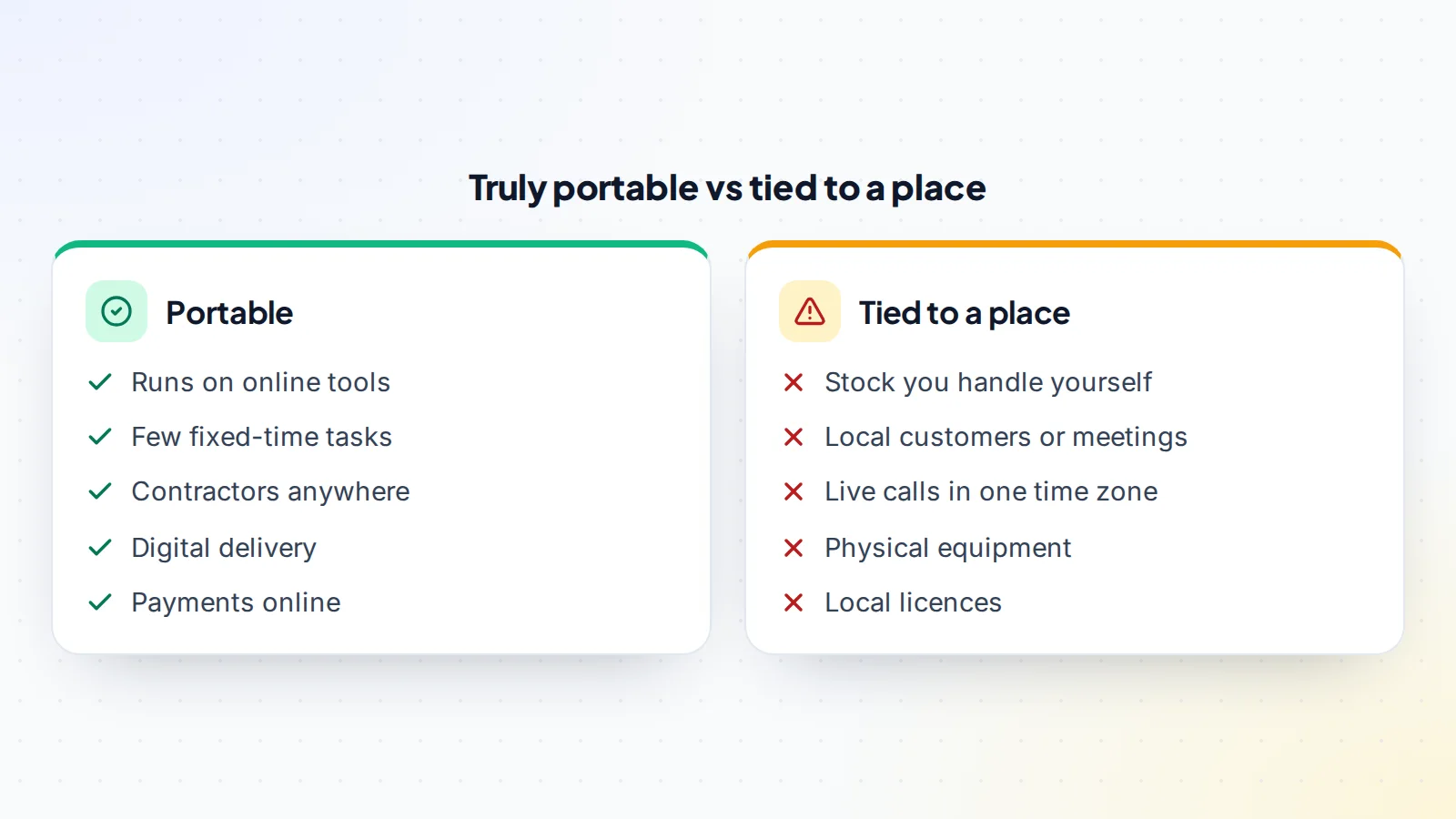
A business is location-independent when nothing about running it needs you in a particular place. The product is delivered online, customers find and pay you online, and the work can be done at any desk. It’s not just about the business model: a consulting firm can be remote, but if clients expect calls at 9am New York time, you’re tied to that time zone. A truly portable business has few tasks that must happen at a fixed time or in a fixed place.
Models that travel well
Most online business models can be run from anywhere, but some are easier than others:
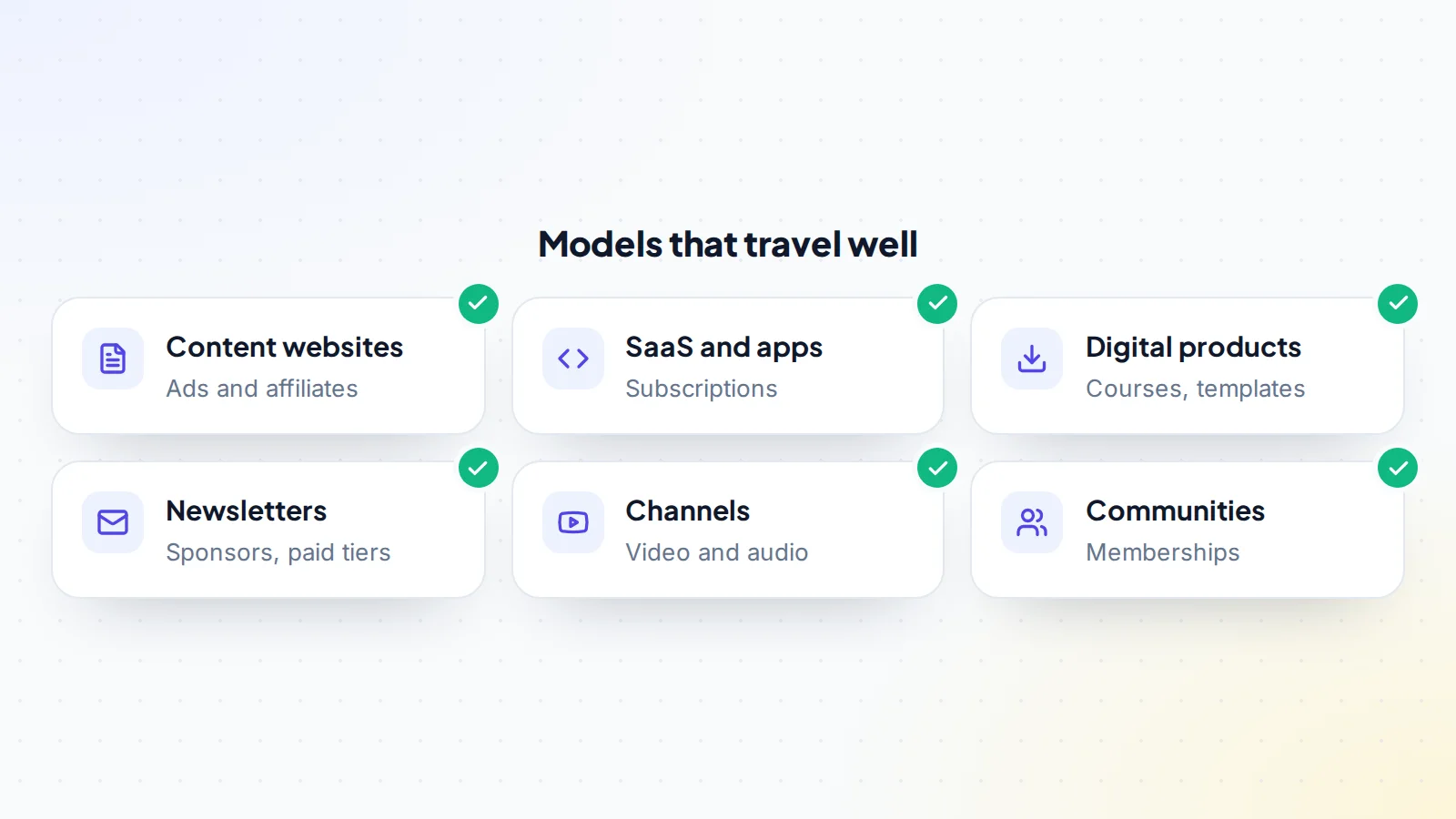
- Content websites: earn from ads, affiliate links or sponsorships; work can be scheduled whenever suits you.
- SaaS and apps: earn subscriptions; support and maintenance can be shared with contractors in other time zones.
- Digital products: courses, templates, ebooks and assets are delivered automatically.
- Newsletters: earn from sponsors or paid subscriptions, written on your own schedule.
- Channels: video and audio channels earn from platform revenue, sponsors and products.
- Communities: paid memberships, run with moderators in different time zones.
What ties a business down
Some businesses look online but have hidden ties to a place. An online shop that ships from the owner’s garage needs someone there. A service business with live client calls needs you awake at certain hours. A business that relies on a local bank account, local licences or local suppliers may be harder to run after a move. Before buying or building, list every task, who does it and whether it needs a particular place or time.
Online shops
Online shops can still be location-independent if someone else handles the physical side. Print-on-demand and dropshipping businesses use suppliers who make and ship products; others use fulfilment companies that store stock and send orders. The owner manages the store, marketing and suppliers from anywhere. The trade-off is less control over quality and delivery times. Read niche research for choosing what to sell.
Owner time
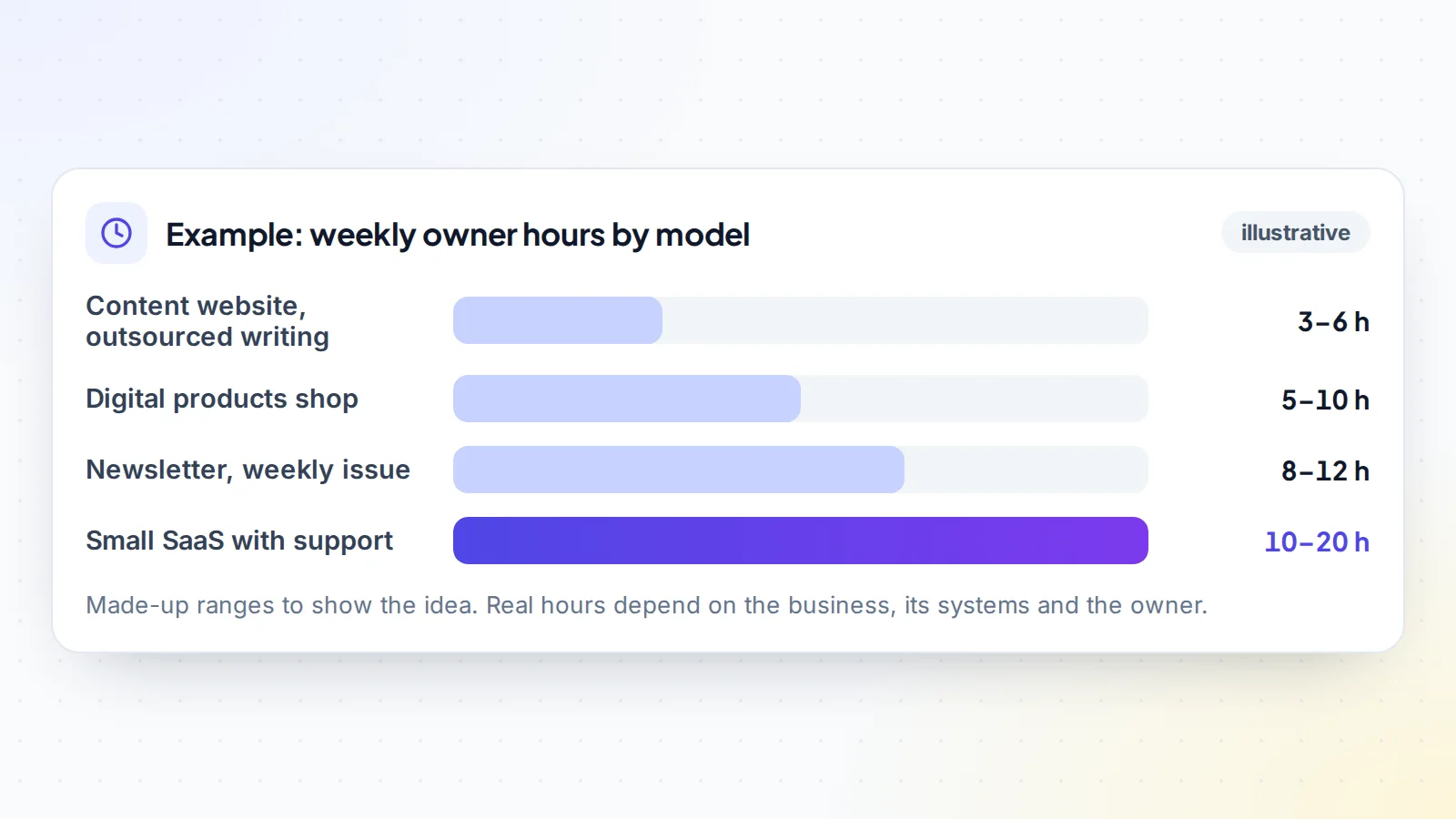
Location independence isn’t the same as passive income. Most businesses need regular work: publishing, answering customers, managing contractors, checking numbers. The amount varies widely by model and by how well the business is set up. When buying, ask the seller for an honest weekly task list and how many hours each task takes. A business that needs constant, fixed-time attention is harder to run from a beach than one with flexible tasks.
Tools that make it work
Running a business from anywhere relies on good tools: cloud hosting, online payment providers, a shared password manager, project management, cloud storage and communication tools. Two-step verification on every important account matters even more when you log in from different places and networks; the US Cybersecurity and Infrastructure Security Agency recommends multi-factor authentication as one of the simplest ways to protect accounts. Keep recovery options up to date, because losing access to an account while abroad is much harder to fix.
Payments and banking
Payment providers and banks have rules about where account holders live and where businesses are registered. Moving country can affect which providers you can use, and some accounts must be updated or moved when you relocate. Before a move, check what your payment provider, bank and marketplaces need. Keep enough reserve to cover a delay if an account has to be reviewed.
Tax and legal questions
Where you live usually decides where you pay tax, and where the business is registered matters too. Moving around can create obligations in more than one country, and rules about residency vary. Data protection, consumer law and sales taxes can depend on where your customers are, wherever you are. None of this stops a location-independent business, but it’s worth getting advice before you move and whenever your plans change. Read the online business glossary for the common terms.
Working with contractors
Many location-independent businesses rely on freelancers: writers, developers, designers, virtual assistants and support staff. Contractors in different time zones can keep things moving while you’re offline. Clear written processes help them work without constant questions. Pay through traceable methods and keep agreements on file. If you’re buying a business, find out which contractors are staying, on what terms, and whether processes are written down.
Contractors and the law
Whether someone is a contractor or an employee isn’t just a label you choose. In the US, the IRS explains that it depends on the degree of control and independence in the relationship, such as who decides how and when the work is done. Other countries have their own tests. Getting it wrong can bring tax and legal problems, so if a freelancer works only for you, on set hours, under close direction, take advice on how the relationship should be treated.
Time zones and customers
Customers rarely care where you are, but they do care how quickly you reply. A location-independent business can turn time zones into an advantage: support in several regions means faster replies around the clock. Set clear expectations, such as replying within one working day, and use auto-replies and help pages so customers can find answers while you’re asleep. If a business sells to one country, consider when its customers are most active and plan your working hours, or a contractor’s, around that window.
Build or buy
You can build a location-independent business from scratch, or buy one that already earns. Building costs less money but more time, often months or years before income is reliable, and many new projects never reach a steady income at all. Buying costs more up front but starts with income, an audience and systems. The risk moves from “will this work?” to “is this what the seller says it is?”, which is what due diligence answers. Many buyers choose a small established business first, learn how it runs, then build or buy more. Browse the marketplace to see what’s available.
What to check before buying
Beyond the usual checks on revenue, traffic and transfers, a buyer who wants freedom of location should check:
- Every regular task, who does it and whether it needs a fixed time or place.
- Whether accounts and payment providers can be held by someone in your country.
- How the seller handles support and in which time zones.
- Whether contractors are staying and processes are documented.
- Any local licences, suppliers or physical assets.
Read how to give Google Analytics access for one of the first data checks.
Valuing a portable business
Buyers often value portability. Businesses that need little owner time, use documented processes and have no ties to a place can attract more buyers, and more buyers usually help the price. A business that only runs because the owner works long, fixed hours is harder to transfer and tends to sell for less. Read how to price a business listing for how buyers think about it.
Routines that keep it running
Freedom of location works best with a steady routine. Many owners pick set days for publishing, numbers and contractor check-ins, and keep a simple dashboard of the figures that matter. Automate what can be automated, such as backups, payment reminders and scheduled posts. Keep a short handbook of how each task is done, so a contractor can step in if you’re travelling or unwell. These habits also make the business easier to sell later.
Connectivity and backups
A reliable internet connection is the one thing a location-independent business can’t do without. Many owners carry a backup, such as a mobile data plan, and plan important work for places where they know the connection is good. Keep files in the cloud and backups of key data, and make sure you can reach important accounts from more than one device. Small precautions like these prevent a lost laptop or bad connection from becoming a crisis.
Selling it later
A business you can run from anywhere is usually a business someone else can run from anywhere too, and that makes it easier to sell. Buyers look for documented processes, low owner time, clean accounts and assets that transfer without fuss. If you build or buy with that in mind from day one, you keep your options open: you can run it for years, hand it to a manager, or sell when your plans change. Read pricing a business listing when that time comes.
Above all, treat freedom of location as something you design into the business rather than something you hope for. Every process written down, every task moved to a flexible schedule and every account secured makes the business more portable, more resilient and more valuable, whether you keep it or sell it.
Common mistakes
- Assuming online means portable without checking daily tasks.
- Buying a business that needs fixed-time work in another time zone.
- Ignoring payment provider and banking rules before moving.
- Not getting tax advice when residency changes.
- Weak account security while working from public networks.
- No written processes for contractors.
- Expecting passive income from a business that needs regular work.
A worked example
The details below are made up to show the method.
Rowan wants a business that can be run while travelling. Two listings fit the budget: a small agency serving local clients, and a content website about home brewing that earns from affiliate links and ads. The agency needs weekly client calls in one time zone; the website needs articles published and links checked, all on a flexible schedule.
Rowan asks the website’s seller for a weekly task list: about five hours, mostly editing contractor articles and reviewing earnings. The writers are happy to continue, processes are written down, and the affiliate and ad accounts can be held by someone in Rowan’s country. Rowan checks traffic and revenue through connected accounts, buys through escrow, and runs the site from three countries in the first year.
Location-independent business: the checklist
- Every regular task listed with time and place needs.
- Delivery and payments fully online.
- Accounts transferable to your country.
- Contractors and processes documented.
- Two-step verification on all key accounts.
- Tax and residency advice taken before moving.
- Reliable internet and backups planned.
- Owner hours realistic for your plans.
Start by browsing businesses for sale on digiflippers.com, or check a price range with the valuation tool.
Ready to find your next asset?
Browse listings with verified numbers, ask sellers your questions before you offer, and agree every step in a free Deal Room.
Frequently asked questions
What is a location-independent business?
One you can run from anywhere with a laptop and internet, with online delivery and payments.
Which online businesses are easiest to run from anywhere?
Content websites, digital products, newsletters, SaaS with remote support, channels and communities.
Is a location-independent business passive?
Rarely. Most need regular work, though tasks can often be done on a flexible schedule.
Can an online shop be location-independent?
Yes, if suppliers or fulfilment companies handle stock and shipping.
What happens to tax if I move country?
It can change. Rules depend on residency and where the business is registered, so get advice.
Should I build or buy?
Building costs time; buying costs money up front but starts with income. Both can work.
How many hours does a small online business need?
It varies by model and setup. Ask any seller for an honest weekly task list.
Do payment providers care where I live?
Often, yes. Check their rules before moving or buying.