Brandable Domain Names: How to Choose and Value One
A guide to brandable domain names: the qualities that make a name worth paying for, a simple scoring method, pricing for buyers and sellers, trademark checks and safe transfers.
A great name can do a lot of work for a business. It’s easy to remember, easy to say and easy to build a brand around. That’s why brandable domain names, short, distinctive names that don’t simply describe a product, are some of the most sought-after domains on the market. This guide explains what makes a name brandable, how to judge and price one, and how to buy or sell brandable domain names safely, with the trademark checks that protect both sides.
If the name you want is already registered, our guide to buying a domain name that is taken explains how to approach the owner. Once you’ve found one, read how to negotiate a domain purchase.
Key takeaways
- Brandable names are short, easy to say and spell, memorable and flexible.
- They’re often invented or blended words rather than plain descriptions.
- Score each name on the same qualities to compare fairly.
- Check trademarks in your markets before you buy or build.
- Pay through escrow and release funds once the domain is in your account.
What is a brandable domain name?
A brandable domain name is one that works as a brand in its own right. Rather than describing what a business does, such as a name made from two keywords, it gives the business an identity. Many well-known brands use names like this: invented words, real words used in a new way, or two short words blended together. The common thread is that the name is distinctive, easy to remember and able to carry meaning the business gives it over time.
Brandable domain names appeal to startups, product launches and businesses that are rebranding. They also attract domain investors, who buy names they believe businesses will want and sell them later.
What makes a name brandable
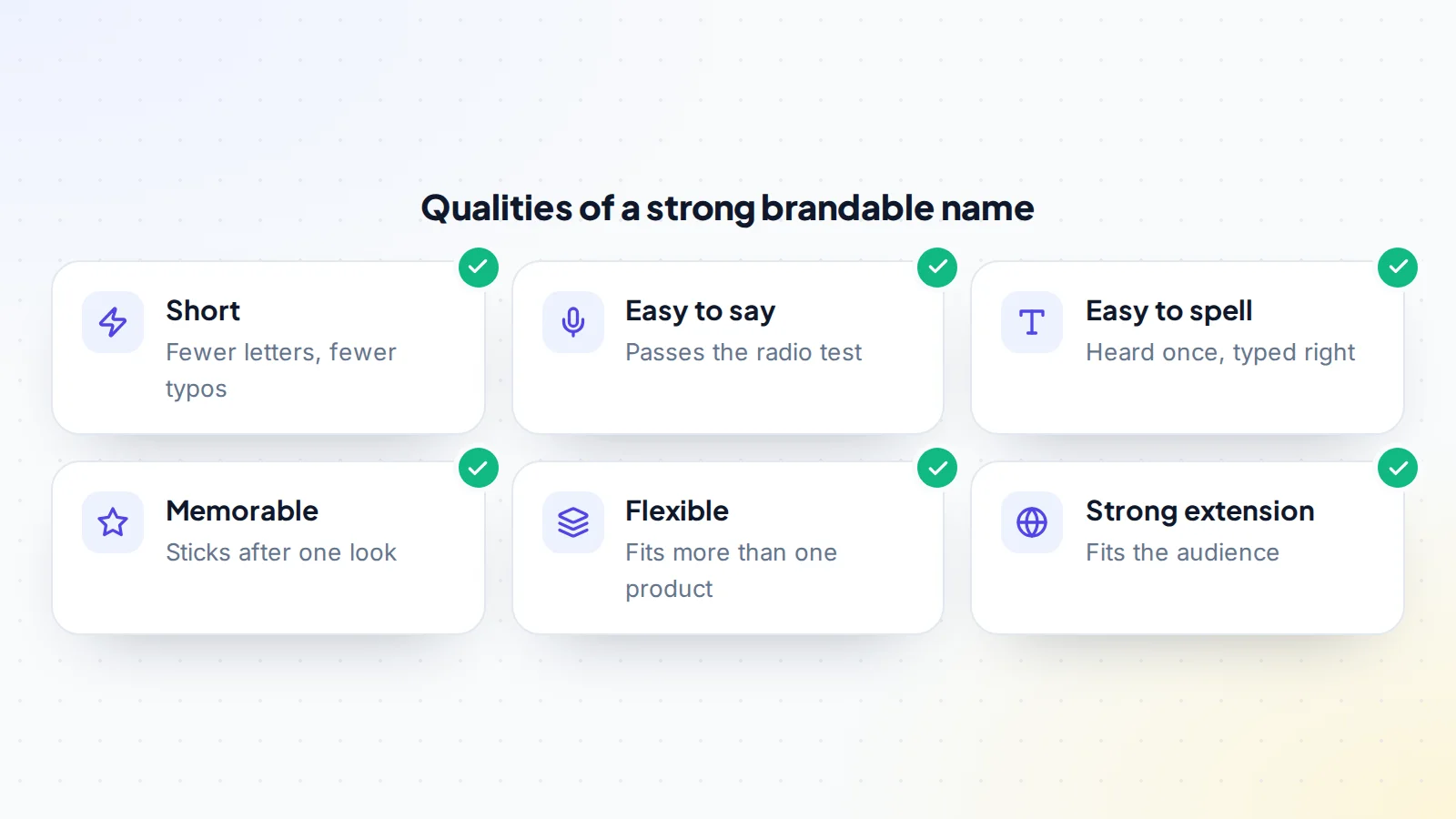
There’s no single formula, but strong brandable names share some qualities:
- Short: fewer letters are quicker to type and less likely to be mistyped.
- Easy to say: if you can say it on the phone and the listener types it correctly, it passes what’s often called the radio test.
- Easy to spell: avoid odd spellings, hyphens and numbers that people must be told about.
- Memorable: distinctive enough to stick after one look.
- Flexible: not tied so tightly to one product that the business would outgrow it.
- Positive or neutral meaning: no unfortunate meanings in the languages of your main markets.
Common patterns in brandable names
Most brandable names follow a handful of patterns. Knowing them helps when you’re searching for a name or describing one you’re selling:
- Invented words: new words with no existing meaning, chosen for sound and shape. They’re distinctive, but need the most marketing to explain.
- Compound words: two short real words joined together, often one describing and one evocative.
- Real words used in a new way: an ordinary word given a new meaning by the brand, such as a fruit or an animal name used for a tech product.
- Blends: parts of two words merged into one, keeping a hint of each meaning.
- Altered spellings: a familiar word with a small change. These can work, but risk failing the spelling test.
Each pattern has strengths and weak spots. Invented words and blends are often easier to protect; real words are easier to remember but may already be in use by many businesses.
Brandable vs descriptive names
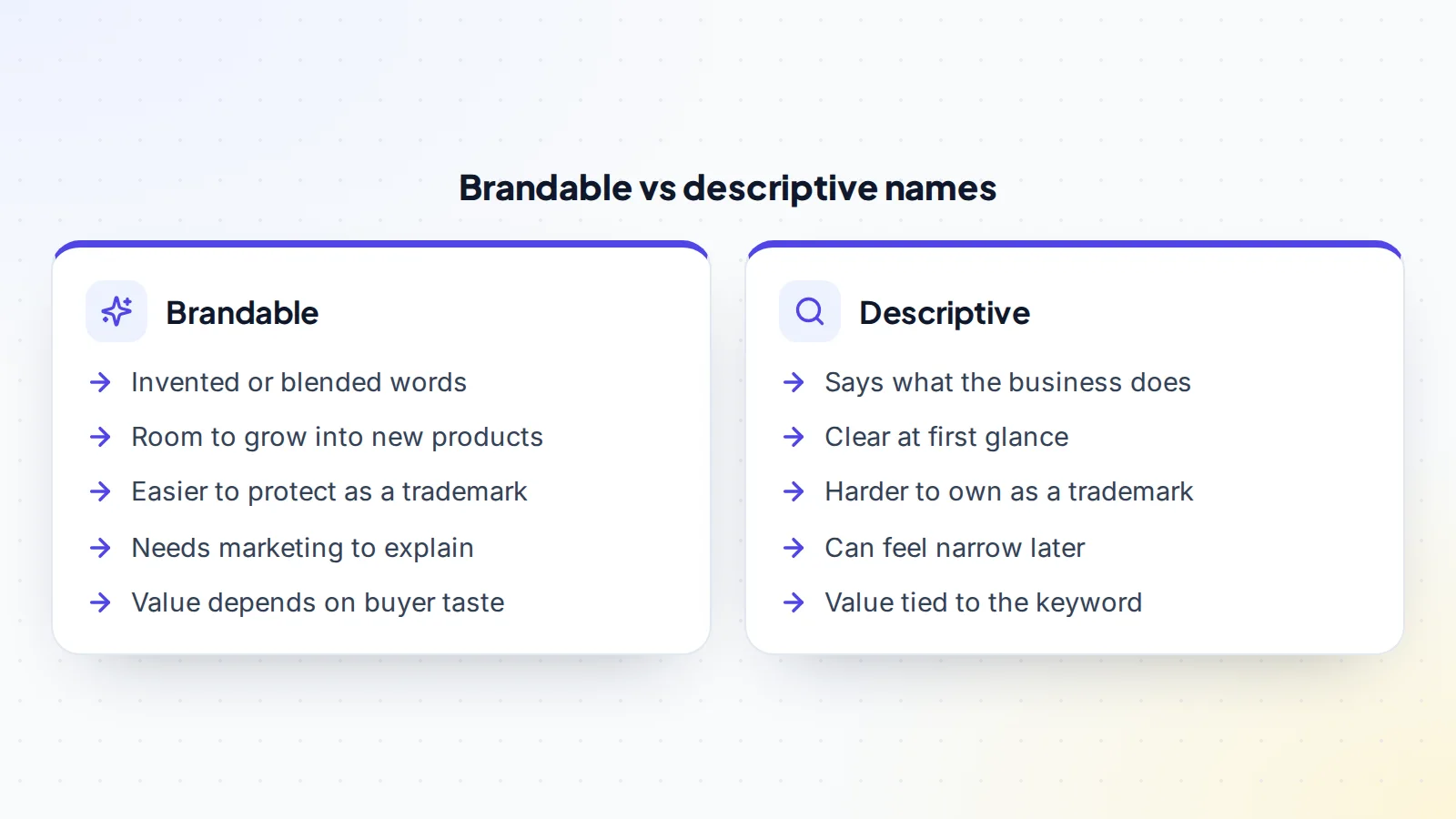
Descriptive names say exactly what a business does. They’re clear at first glance and may suit a local service or a focused site. But they can feel narrow if the business grows, and descriptive words are generally harder to register and protect as trademarks. Brandable names need marketing to give them meaning, but they leave room to grow and are usually more distinctive.
Neither type is better in general. Many successful businesses use each. The question is which suits the business, its audience and its long-term plans.
Choosing the extension
The extension, such as .com, a country code or a newer extension, affects how a name is perceived and how much it’s worth. In many markets, .com is the default people type, which is one reason .com versions of brandable names often cost more. Country-code extensions can suit businesses focused on one country, and some newer extensions have become common in particular industries.
Think about where your customers are and what they’re used to. If you buy a brandable name on one extension, check who owns the others. A competitor or an unrelated business on the .com of your name can cause confusion and lost email.
A simple way to score names
When comparing several brandable domain names, score each on the same qualities, for example from one to five for length, ease of saying, ease of spelling, memorability, flexibility and extension fit. Ask a few people who don’t know the project to hear the name once and type it. Note any meanings in other languages. A simple table makes the choice less about first impressions and more about how the name will work in practice.
The scores won’t give you a price, but they help you decide which names deserve one, and they give you something concrete to discuss with co-founders or a buyer.
Check trademarks first
Before buying or building on a name, search trademark databases in the countries where you’ll trade, such as the USPTO’s search in the United States. Look for registered marks that are the same or confusingly similar in your area of business. A name that clashes with an existing brand could lead to a dispute, including a complaint under the Uniform Domain-Name Dispute-Resolution Policy, which WIPO and other providers administer.
Sellers should check too. A name that clearly targets someone else’s brand is hard to sell and can be lost in a dispute. Our guide to domain trademarks and UDRP explains how these cases work. For larger purchases, a short consultation with a trademark lawyer is money well spent.
Check the name’s history
Many brandable names have been registered before. Look through the Internet Archive’s Wayback Machine for past websites, search for the name to see how it has been used, and check Google’s Safe Browsing status for warnings. A clean history is what you want. Our guide to aged domains and SEO explains why past use matters, and why age alone isn’t a reason to pay more.
How brandable names are priced
Domain prices vary enormously, and there’s no official price list. Value depends on length, quality, extension, demand from businesses and how many buyers could use the name. Investors often hold many names and sell a few each year, which is one reason asking prices can seem high compared with the cost of registering a new name.
Buyers can look at public sales reports from domain marketplaces to see what similar names have sold for, comparing names of similar length, structure and extension. Sellers should do the same before setting a price. A good name with a realistic price and a clear way to buy it is more likely to sell than one with no price at all. For a quick starting range, try the free valuation tool.
Buying a brandable domain
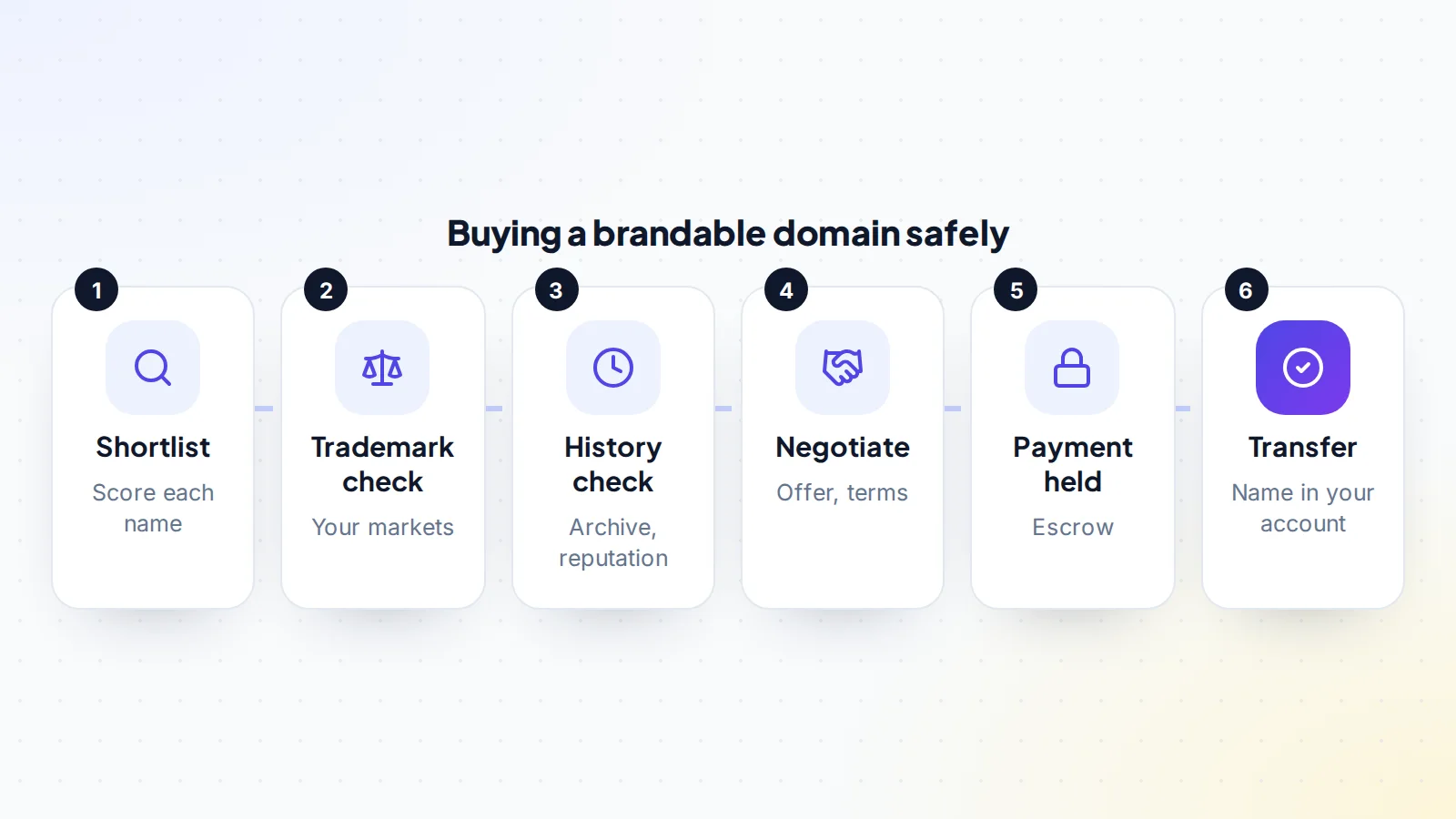
Once you’ve chosen a name and checked trademarks and history, make an offer. Be clear about what you can pay and how quickly you can close. If the name is for sale on a marketplace, you can often buy or negotiate there. If not, find the owner through registration data or contact details on the domain, and approach politely.
Protect the payment. Use escrow, agree the terms in writing, and release the funds only once the domain is in your registrar account. Our guide to seller protection covers the other side of the same deal. When you’re ready to look, browse domains for sale.
Selling a brandable domain
To sell a brandable name, present it the way a buyer will see it. Write a short description of what the name could suit, without overpromising. Make sure the domain isn’t locked by a recent transfer or registrant change, and that you can get the authorisation code from your registrar. Set a clear asking price, or a minimum you’d accept, and respond quickly to serious enquiries.
On digiflippers.com, sellers can verify ownership and list domains with 0% success fee up to $10,000, then 5% (max $5,000). Buyers see verified ownership on the listing, which builds trust before they make an offer.
After you buy
Once the domain is yours, set up renewal so it never lapses, turn on the registrar lock and two-factor authentication, and keep your contact details current. If the name will be your main brand, consider registering close variants and other extensions, and filing a trademark where it makes sense. Then build the brand: the name is the start, not the finish.
Social handles and consistency
A brand lives in more places than its website. Before you commit to a name, check whether matching handles are free on the social platforms your customers use, and whether the name works as an app name or email address. Small differences between the domain and the handles can confuse customers. If the exact handles are taken, decide whether a consistent variant, such as adding a short word, is acceptable before you buy.
Mistakes to avoid
- Choosing a name only you can spell after hearing it.
- Skipping the trademark search because the name is invented.
- Paying a premium for age or for third-party “authority” scores.
- Ignoring who owns the .com or other main extension of your name.
- Paying the seller directly before the domain is in your account.
A worked example
The details below are made up to show the method.
Ana is launching a budgeting app and shortlists five brandable names. Each is scored on length, ease of saying and spelling, memorability, flexibility and extension. Three friends hear each name once and type it; two names are mistyped by everyone and drop out.
Ana searches trademark databases in the app’s main markets. One of the remaining names is close to an existing finance brand, so it goes too. The final name, a short blended word on .com, has a clean archive history and no Safe Browsing warnings. It’s listed by an investor, and public sales of similar names suggest the asking price is high but within reason.
Ana makes an offer below the asking price, and they agree a figure in between. Payment goes into escrow, the seller unlocks the domain and provides the authorisation code, and the domain arrives in Ana’s registrar account. The escrow funds are released, and Ana turns on auto-renewal and the registrar lock that day.
Brandable domain names: the checklist
- Names shortlisted and scored on the same qualities.
- Radio test done with people new to the project.
- Meanings checked in your main markets’ languages.
- Trademarks searched in the countries where you’ll trade.
- Archive history and Safe Browsing status checked.
- Other extensions and close variants reviewed.
- Price compared with public sales of similar names.
- Payment through escrow, released after transfer.
- Auto-renewal, registrar lock and two-factor turned on.
Ready to find your next asset?
Browse listings with verified numbers, ask sellers your questions before you offer, and agree every step in a free Deal Room.
Frequently asked questions
What is a brandable domain name?
A distinctive name that works as a brand, often invented or blended, rather than a plain description of a product or service.
Are brandable domains better than keyword domains?
Not in general. Brandable names leave room to grow and are often easier to protect; descriptive names are clear at first glance. Choose what suits the business.
Does the extension matter?
Yes. It affects how people perceive and remember the name, and its price. Think about where your customers are and what they’re used to typing.
How do I know if a price is fair?
Compare public sales of names with similar length, structure and extension, and consider how many buyers could use the name.
Do I need to check trademarks?
Yes. A name that clashes with an existing mark could lead to a dispute. Search in the countries where you’ll trade, and get legal advice for larger purchases.
How do I pay safely?
Use escrow, agree terms in writing and release the payment only once the domain is in your registrar account.
Can I sell a brandable domain I’m not using?
Yes. Set a clear price, make sure the domain is unlocked and you can get the authorisation code, and list it where buyers look.