Buying a TikTok Account: What to Look For
A buyer's checklist for TikTok accounts: reading TikTok Studio analytics, checking audience and engagement, understanding income such as Creator Rewards, pricing, and a secure handover.

A TikTok account with an engaged audience can be a fast route into a niche. Instead of spending months finding your voice and waiting for the algorithm to notice you, you start with followers who already watch, comment and share. But two accounts with the same follower count can be worth very different amounts. This guide explains how to buy a TikTok account with confidence: what to check in the analytics, how to judge audience and income, how to price it, and how to complete a secure handover.
For a broader look at the market, see our guide to buying social media accounts. If you’re on the other side of the deal, read how to sell a TikTok account.
Key takeaways
- Check key metrics, content and followers live in TikTok Studio, not in screenshots.
- Look for steady views across many videos, not one viral hit.
- Match the audience’s countries and ages to your plans.
- Understand where income comes from and whether it continues under you.
- Pay through escrow and release funds after a full, secure handover.
Why buy a TikTok account
TikTok rewards content that people watch and interact with, and an account that already has an engaged audience gives you a head start. Brands use accounts to reach customers, creators buy accounts in niches they want to grow into, and businesses buy them to promote products or a shop. A good account comes with followers, a posting history the audience responds to, and often a style and format that already works.
The value lies in the audience’s attention. Your job as a buyer is to confirm that attention is real, steady and relevant to what you plan to do with it.
Where to find TikTok accounts for sale
Accounts are sold through marketplaces, brokers and private deals. A marketplace gives you listings in one place, seller profiles and history, and a record of messages and offers. On digiflippers.com, sellers can verify their identity and connect details for checks, and you can browse social media accounts for sale. Wherever you look, favour sellers who are happy to show analytics live and use escrow or a middleman for payment.
Check the analytics in TikTok Studio
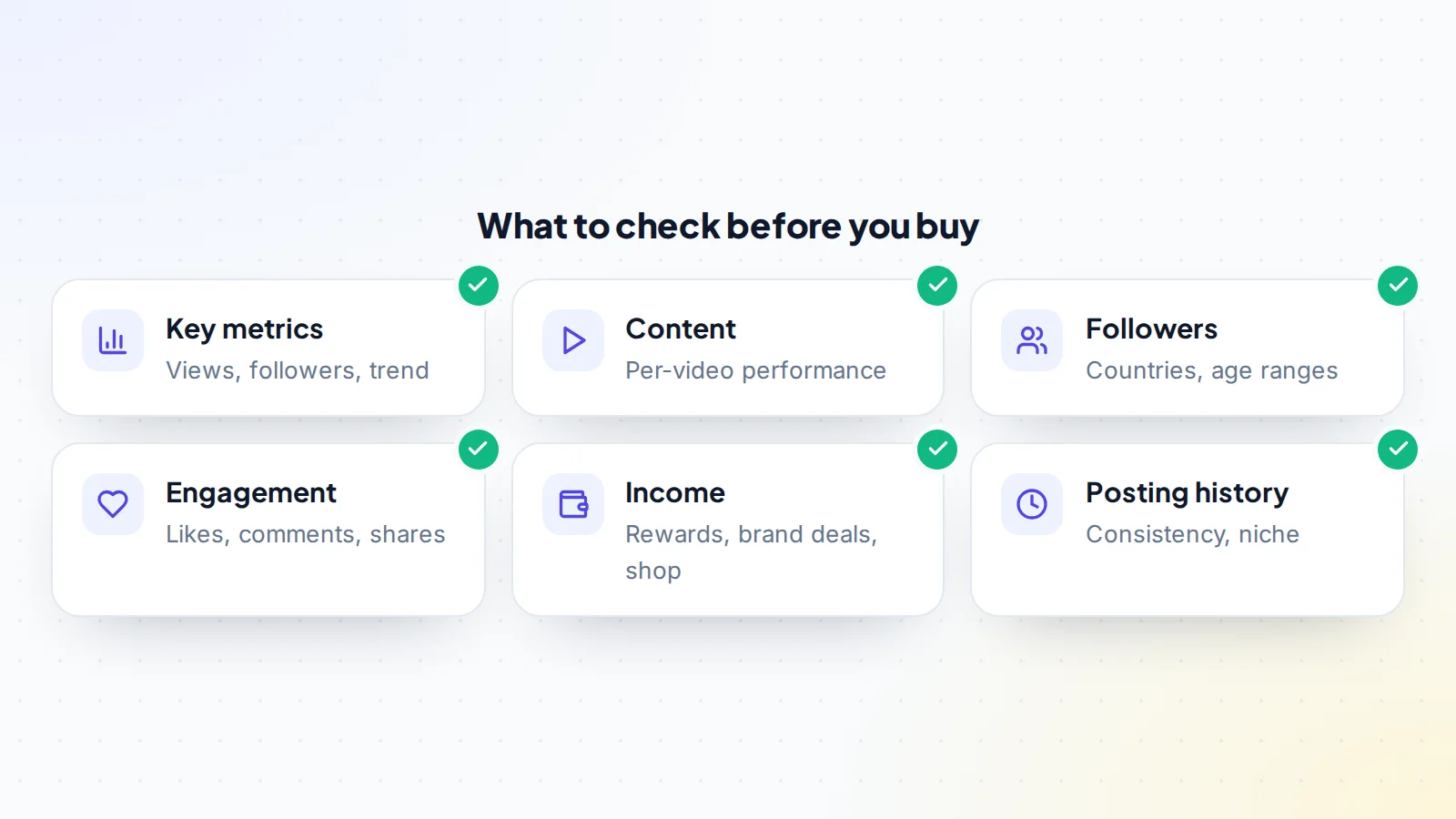
TikTok’s creator tools include analytics, available in the app, on the web and in the TikTok Studio app. Analytics is split into key metrics for the account’s overall performance, content for individual videos, and followers for a demographic view of the audience. Ask the seller to open each section on a live screen-share and walk you through it.
- Key metrics: total views, net followers, likes and other figures over the available periods.
- Content: performance of recent videos, so you can see whether views are spread across many posts.
- Followers: where followers are and their age ranges, which affects brand deals and ad value.
Compare what you see with the public profile. View counts on recent videos should roughly match the analytics. Note any sudden spikes or drops and ask what caused them.
Judge engagement, not just followers
Follower count is the headline number, but engagement shows whether people still care. Look at likes, comments and shares on the last 20 to 30 videos, and read the comments. Real comments talk about the video, ask questions or tag friends. Steady engagement across many videos is a much better sign than one video with millions of views and quiet posts around it. Our guide to engagement rate explains how to calculate it and compare accounts fairly.
Match the audience to your plans
An audience is valuable when it fits what you’ll do with it. If you sell products in one country, followers there matter most. If you plan brand deals, check that the audience’s age ranges and interests match the brands you’ll approach. An account with a smaller audience in the right place can be worth more to you than a larger one spread across markets you can’t serve.
Look at the niche too. Accounts with a clear theme keep their audience more easily when ownership changes, because followers came for the topic. Accounts built around one person’s face or personality need a plan: will you keep the format with new presenters, or shift gradually?
Understand the income
TikTok accounts can earn in several ways: brand deals, affiliate links, a shop, LIVE gifts and TikTok’s Creator Rewards Program. Ask the seller to show each income source and how much it earned over the last 6 to 12 months.
For the Creator Rewards Program, TikTok’s support pages list eligibility requirements, including at least 10,000 followers and at least 100,000 video views in the last 30 days, being at least 18 (19 in South Korea), being based in a country where the program is available, having a personal account in good standing and authentic account information. Videos must be original and at least one minute long. Because eligibility depends on the account holder’s own details, plan how monetization will continue under you before you agree a price, and treat rewards income as something to confirm rather than assume.
Brand deals usually depend on relationships. Ask which brands have worked with the account, whether they’ll continue, and whether the seller will introduce you.
Personal or business account?
TikTok accounts can be set up as personal or business accounts, and the type affects which tools are available. TikTok’s support pages say the Creator Rewards Program is for personal accounts, while business accounts aren’t eligible. Business accounts, in turn, give access to business tools that suit brands. Ask which type the account is, and think about which you’ll need: a brand selling products may prefer business tools, while a creator planning to earn rewards may need a personal account. Knowing this early helps you plan income and avoids surprises after the handover.
How TikTok accounts are priced
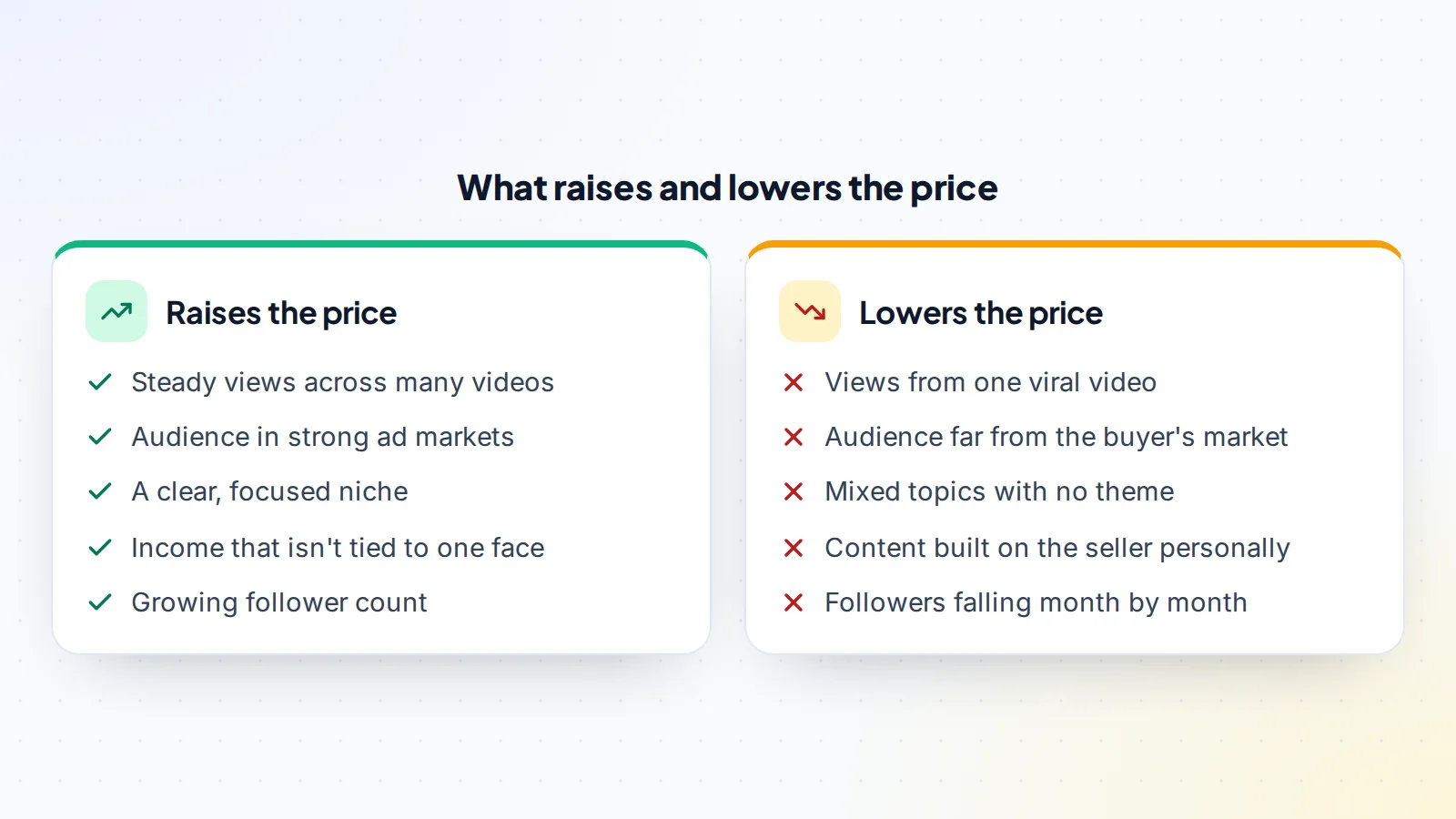
Accounts with steady income are usually priced as a multiple of monthly profit. Accounts with little income are priced on audience size, engagement, niche and growth, compared with similar accounts for sale. Either way, the factors that move the price are the same: steady views, an audience in strong markets, a focused niche, income that doesn’t depend on the seller personally, and growth rather than decline.
Ask for a valuation report or build your own comparison with similar listings. For a quick starting range, try the free valuation tool.
Questions to ask the seller
- Why are you selling, and what will you do next?
- Who creates the content, and can that continue or be replaced?
- Where do views come from: the For You feed, search or profile visits?
- Which income sources are active, and what did each earn by month?
- Which email and phone number are attached, and are they yours to hand over?
- Is there a linked shop, ad account or other business tool?
- Will you help with introductions to brand partners?
Plan a secure handover
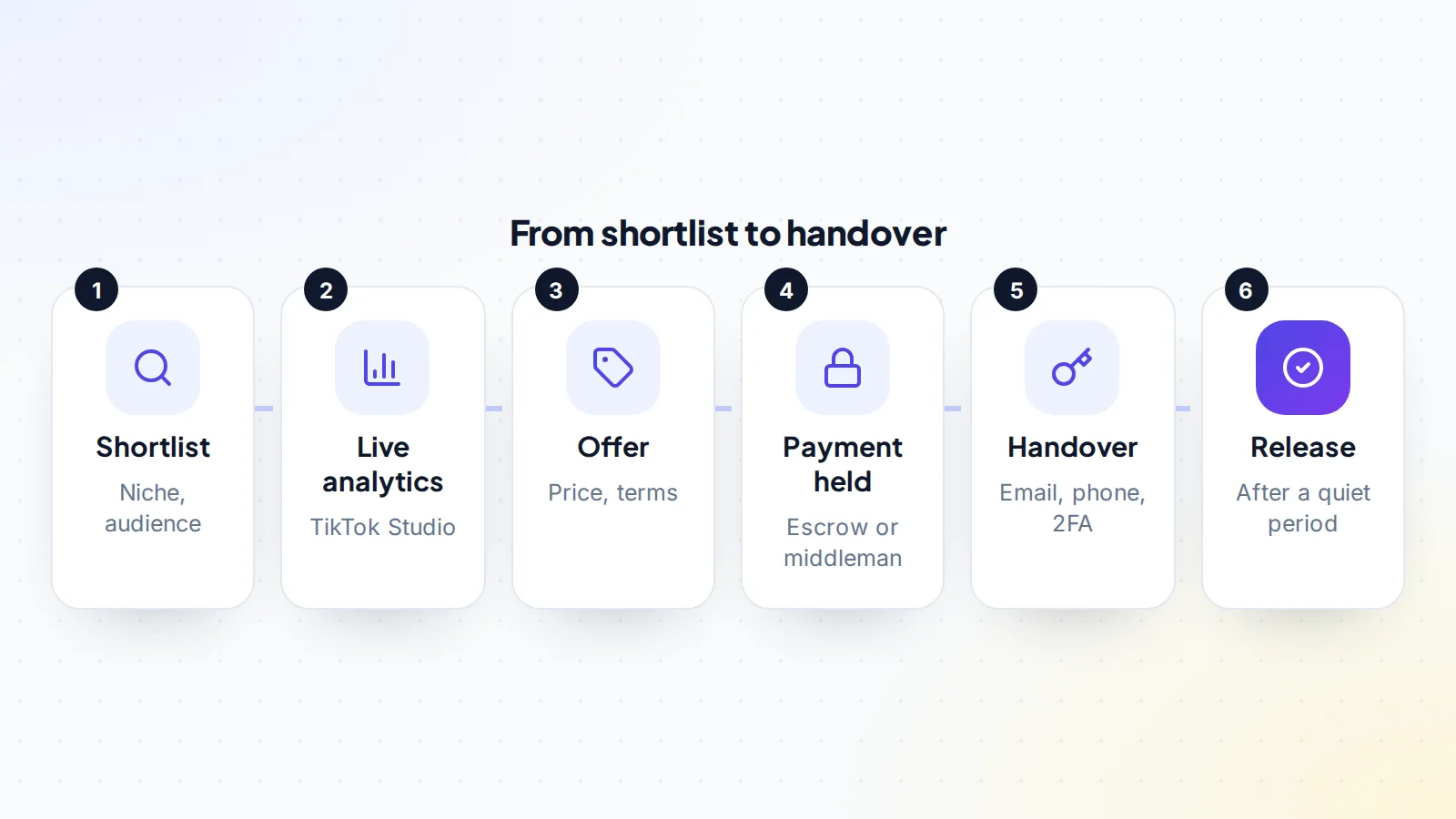
The handover is where you take full control of the account and everything linked to it. Agree the steps in writing before any payment moves:
- Change the email address on the account to one you control, and confirm it.
- Change the phone number to yours.
- Set a new password and turn on two-step verification with your own methods.
- Remove the seller’s devices from the account’s security settings.
- Move any linked tools, such as a shop or business account, following each tool’s own steps.
- Collect any content files, music licences and brand contacts included in the sale.
Do each step on a call together if possible, so problems are solved straight away. Our guide to Facebook Page transfers covers a similar handover on Meta, if the deal includes accounts there too.
Pay safely
Use escrow or a middleman so the money is held while the handover happens. Agree a short quiet period after the handover, for example a week or two, during which you check that all sign-in details stay yours before the funds are released. On digiflippers.com, the ways to pay in a deal are: directly to the seller, through escrow, and the platform never holds the money itself. The marketplace’s own middleman service fee: not offered.
Our guide to seller protection explains what sellers look for in a buyer, which helps you present yourself as a reliable one.
Content, music and files
The videos on the account stay with it, but the raw files, edits and project files usually live on the seller’s devices. If you want them, list them in the agreement. Ask about any music, footage or images licensed from third parties and whether those licences transfer. For future videos, use music and assets that you have the rights to use, such as tracks from TikTok’s own libraries for the account type or licensed music. Keeping a simple record of what you use makes future brand deals easier.
Build a growth plan before you pay
A clear plan makes the purchase easier to judge. Write down what you’ll post in the first three months, how often, who will create it and how the account will earn. Estimate realistic costs for content creation. If the numbers only work with a big jump in views, the price may be too high. If they work at today’s level, you have room to grow.
Your first month as owner
Keep posting in the style the audience knows, at a similar pace. Sudden changes in topic or format can lower engagement while the audience gets used to a new owner. Watch your analytics weekly: views per video, follower growth and engagement. Reply to comments to show the account is active. Once things are steady, introduce new ideas gradually and measure how the audience responds. A simple weekly log of what you posted and how each video performed shows quickly what works with this audience.
A worked example
The details below are made up to show the method.
Kai wants a TikTok account in the home cooking niche for a recipe app. A seller lists an account with 180,000 followers. On a screen-share, TikTok Studio shows steady views across the last 30 videos, most followers in the countries the app serves, and an age range that matches the app’s users. Comments are full of questions about recipes.
The seller shows brand deal invoices from the last six months and explains that a friend films the videos, which can continue for a fee. Kai compares similar listings and makes an offer based on the brand income and the audience fit. They agree terms, the payment goes into escrow, and on a call the seller changes the email and phone to Kai’s details, Kai sets a new password and two-step verification, and old devices are removed. After a two-week quiet period, the funds are released.
Buy a TikTok account: the checklist
- Key metrics, content and followers seen live in TikTok Studio.
- Views steady across the last 20 to 30 videos.
- Comments read and engagement compared with similar accounts.
- Audience countries and ages matched to your plans.
- Income sources shown by month and continuity planned.
- Content creation plan agreed.
- Price based on income, audience and comparable listings.
- Handover steps agreed in writing.
- Payment held through escrow or a middleman until after a quiet period.
Ready to find your next asset?
Browse listings with verified numbers, ask sellers your questions before you offer, and agree every step in a free Deal Room.
Frequently asked questions
What should I check before I buy a TikTok account?
Key metrics, per-video performance and follower details in TikTok Studio, plus engagement, income and posting history.
How do I know the followers are real?
Look for steady views and engagement across many videos, real comments, and an audience that fits the niche. Our guide to spotting fake followers explains more.
How much does a TikTok account cost?
Accounts with income are often priced on monthly profit; others on audience, engagement, niche and growth compared with similar listings.
Does Creator Rewards income continue after I buy?
Eligibility depends on the account holder’s own details, such as age, country and authentic account information, so confirm how monetization will continue under you before agreeing a price.
What does the handover include?
Changing the email, phone and password, setting up your own two-step verification, removing old devices and moving any linked tools.
How should I pay?
Through escrow or a middleman, with funds released after a short quiet period once all sign-in details are yours.
Should I change the content after buying?
Not straight away. Keep the style the audience knows, then introduce changes gradually.