What Is the Creator Economy? How Audiences Became Assets
A plain guide to the creator economy: the main ways creators earn, platform programmes and their requirements, the parts of a creator business, what makes it valuable and how creator assets change hands.

Millions of people now earn from what they create online: videos, newsletters, podcasts, courses, designs and communities. Together, they make up what’s often called the creator economy. For some, it’s a hobby that pays for itself; for others, it’s a full business with staff, products and brand partners. And like any business, a successful creator business can be built, grown and sold. This guide explains how the creator economy works, how creators earn, what makes a creator business valuable, and how creator assets change hands.
Creator businesses are one kind of digital asset; see what is a digital asset for the bigger picture. For the investment angle, read about digital real estate.
Key takeaways
- The creator economy covers people and small teams who earn from content and audiences.
- Creators earn from platform revenue, brand deals, affiliates, products, memberships and fan support.
- Platform programmes have eligibility rules, and income can depend on them.
- Creator businesses built around a brand or topic are easier to sell than those built around one person.
- Owned channels, diverse income and documented systems make a creator business more valuable.
What is the creator economy?
The creator economy is the system of people, platforms and businesses built around creating content and building audiences online. It includes video creators, streamers, writers, podcasters, educators, designers and community builders, along with the platforms they publish on, the tools they use and the brands that work with them.
What sets it apart is that individuals, or very small teams, can reach large audiences directly and earn from them in many ways. A single person with a camera, a newsletter or a niche skill can build an income that once needed a media company.
The main formats
- Video: long-form channels, short-form clips and live streams. Video often reaches the largest audiences, and platform revenue programmes are common.
- Newsletters: written content delivered by email. Newsletters own their audience directly and earn from sponsorships and paid subscriptions.
- Podcasts: audio shows, often earning from sponsorships and listener support.
- Courses and education: creators teaching a skill, earning from course sales and memberships.
- Communities: paid or free groups where members connect, often alongside other formats.
- Design and digital goods: templates, presets, fonts and assets sold to other creators and businesses.
Many creators combine formats: a video channel that feeds a newsletter, which sells a course, which builds a community. Each format has its own platforms, rules and handover process.
How creators earn
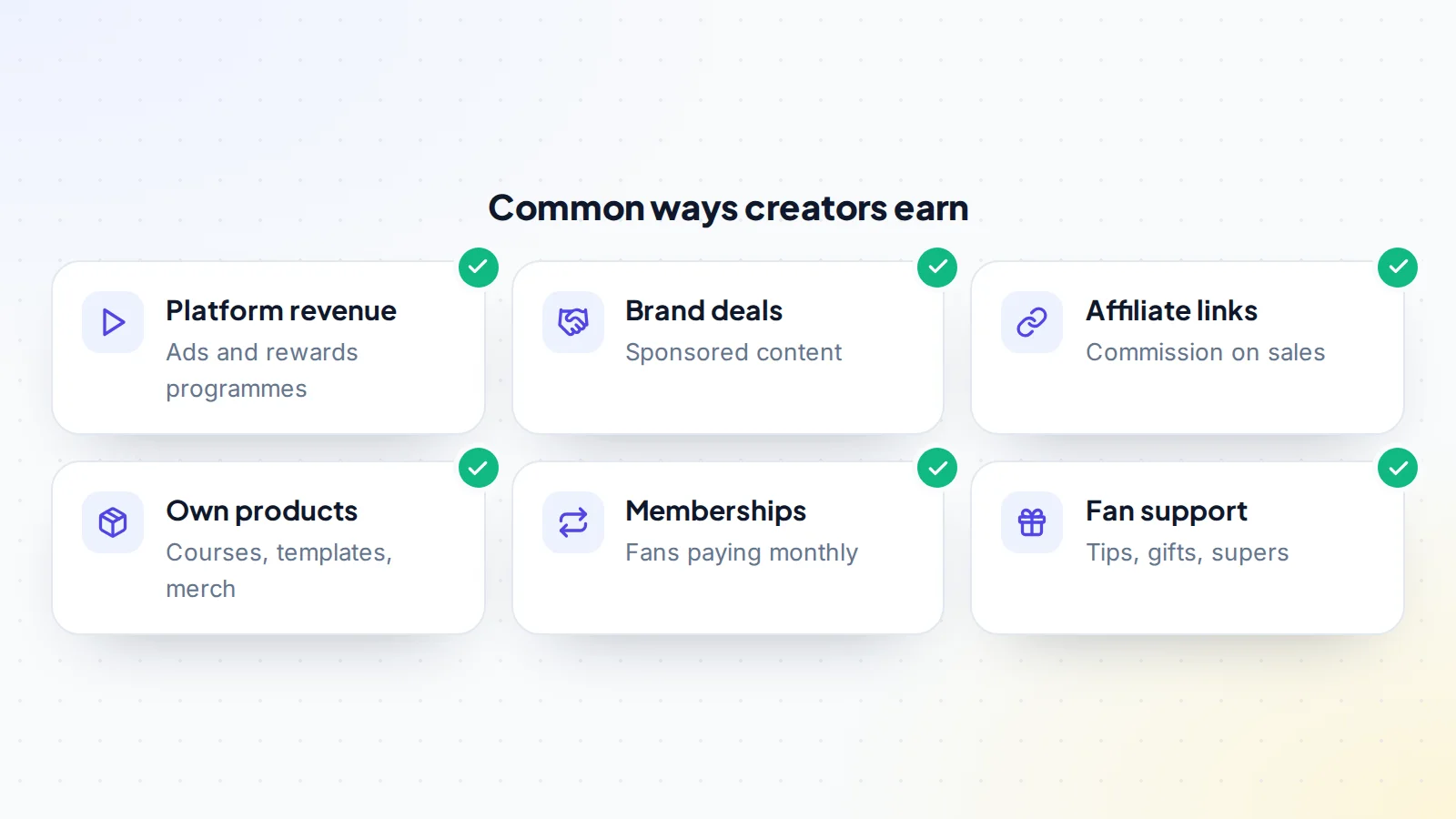
Most creator businesses earn from a mix of sources:
- Platform revenue: a share of advertising or rewards programmes run by platforms.
- Brand deals: companies paying for sponsored videos, posts, mentions or newsletters.
- Affiliate income: commission on sales made through the creator’s links.
- Own products: courses, ebooks, templates, presets, merchandise or software.
- Memberships and subscriptions: fans paying monthly for extra content or access.
- Fan support: tips, gifts and paid messages during live streams or on posts.
The mix matters. Income that depends heavily on one platform’s programme, or on the creator’s personal relationships, is more fragile than income spread across several sources the business controls.
Platform programmes and their rules
Many platforms share revenue with creators who meet certain requirements. YouTube’s Partner Program, for example, requires 1,000 subscribers plus either 4,000 qualified watch hours in the last 12 months or 10 million qualified Shorts views in the last 90 days, along with following its monetization policies, living in an eligible country, having no active Community Guidelines strikes and using 2-Step Verification. YouTube also offers an expanded programme with lower thresholds for features such as fan funding in eligible countries. TikTok’s Creator Rewards Program lists its own requirements, including follower and view thresholds and being at least 18.
These programmes are a valuable source of income, but they’re set by the platforms and can change. Creators and buyers alike should treat platform revenue as one part of the picture and check the current requirements directly.
Brand deals and disclosure
Brand partnerships are often a creator’s largest income source. They also come with responsibilities. The FTC’s guidance for influencers says creators should disclose any financial, employment, personal or family relationship with a brand, clearly and in the content itself. Clear disclosure protects the audience’s trust, which is the asset that makes brand deals possible in the first place. For anyone buying a creator business, a record of properly disclosed partnerships is a sign it has been run professionally.
What a creator business is made of
A creator business is more than a channel or an account. It usually includes:
- Content on one or more platforms, and the accounts that host it.
- An audience, ideally including an email list or other channel the business owns.
- Income sources, with contracts, dashboards and payout records.
- Products, such as courses or templates, and the rights to them.
- A brand: name, style, website and reputation.
- Systems: editing workflows, publishing schedules, contractors and tools.
The more of these are documented and owned by the business rather than the person, the more the business is worth to someone else.
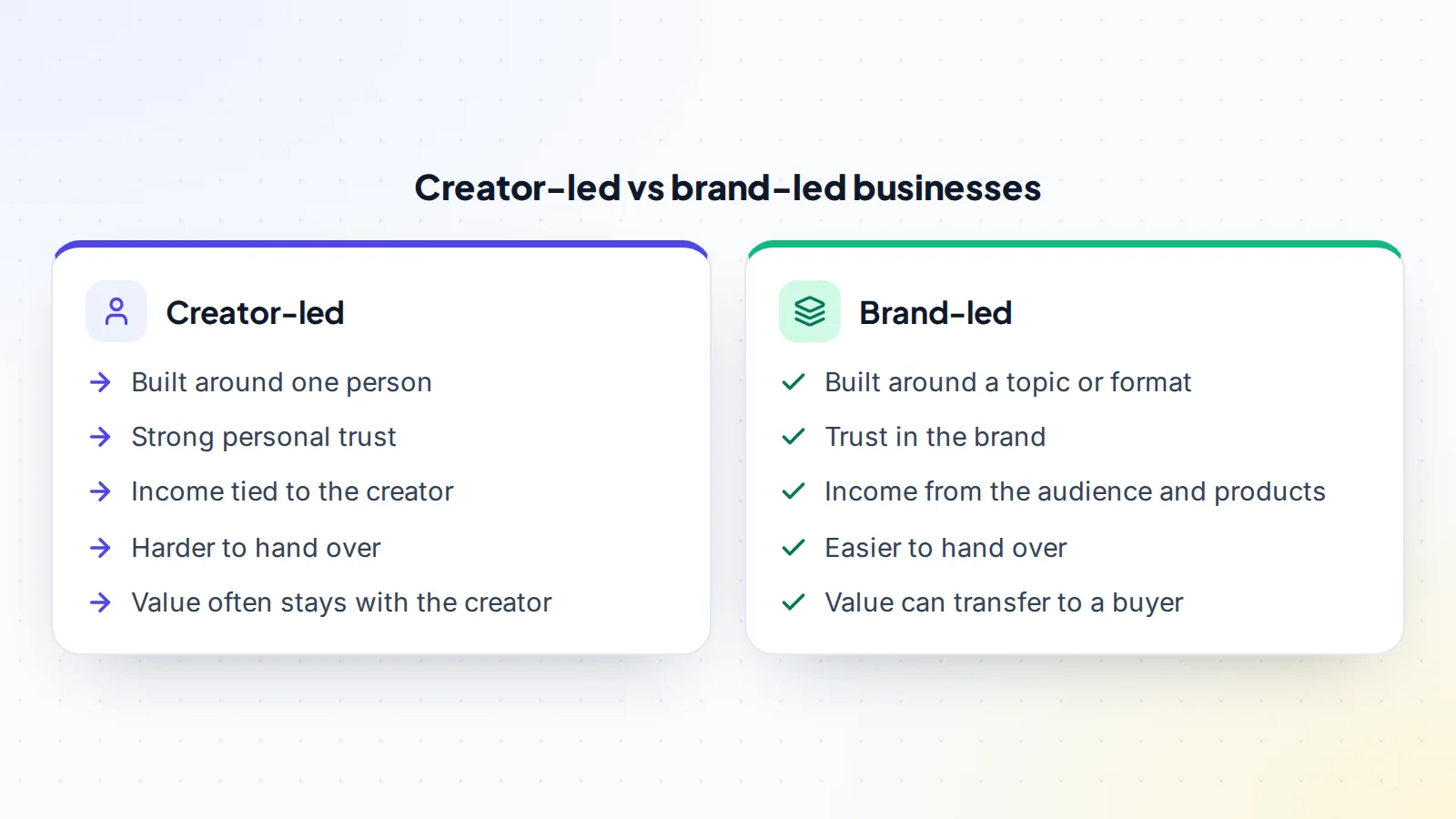
Creator-led vs brand-led
Some creator businesses are built around one person: their face, voice and personality. Audiences trust that person, and much of the income depends on them. These businesses can be very profitable, but they’re harder to hand over, because the most valuable thing, the person, doesn’t transfer.
Others are built around a topic, a format or a brand. The audience comes for the subject, the style or the usefulness of the content. These businesses can continue with new presenters, writers or editors, and are much easier to sell. Many successful creators move gradually from the first model toward the second as they grow, hiring a team and building a brand that can outlast their personal involvement.
Owned and rented audiences
A useful way to think about creator audiences is “owned” versus “rented”. Followers on a social platform are rented: the platform decides who sees each post, and its rules can change. An email list or a website audience is owned: the creator can reach those people directly. Most successful creator businesses use platforms to reach new people and owned channels to keep them. For a buyer, a large owned audience makes the business far less exposed to changes on any one platform.
The teams behind creators
Behind many large creator businesses is a small team: editors, writers, designers, community managers, sponsorship managers and assistants, often working as freelancers. A team brings consistency and frees the creator to focus on the work only they can do. It also makes a business more transferable, because the people who know how things work can stay on after a sale. When valuing a creator business, find out who does what, how they’re paid, and whether they’ll continue.
What makes a creator business valuable
Buyers of creator businesses look for the same things as buyers of other online businesses: steady, verified profit; growth; diverse income and traffic; and a business that can run without the seller. In the creator economy, a few points matter especially:
- Owned audience: an email list or website reduces dependence on platform algorithms.
- Engagement: an audience that responds is worth more than a large but quiet one.
- Brand partnerships: relationships that can continue with a new owner.
- Products: income the business controls, with clear rights.
- Systems and team: documented workflows and people who can keep things running.
Our guide to increasing business value before a sale covers practical steps, many of which apply directly to creators.
Buying and selling creator assets
Creator assets change hands in several forms: YouTube channels, social accounts, newsletters, podcasts, online courses, communities and complete creator businesses with several of these combined. Each has its own handover process and platform rules, so check how ownership moves for each part before agreeing a deal.
Sellers should prepare analytics, income records and a clear plan for how the content continues. Buyers should verify everything at the source, understand how much depends on the seller personally, and protect the payment with escrow. On digiflippers.com, members can verify their profiles, and you can read about trust and safety. You can browse the marketplace or list an asset with 0% success fee up to $10,000, then 5% (max $5,000).
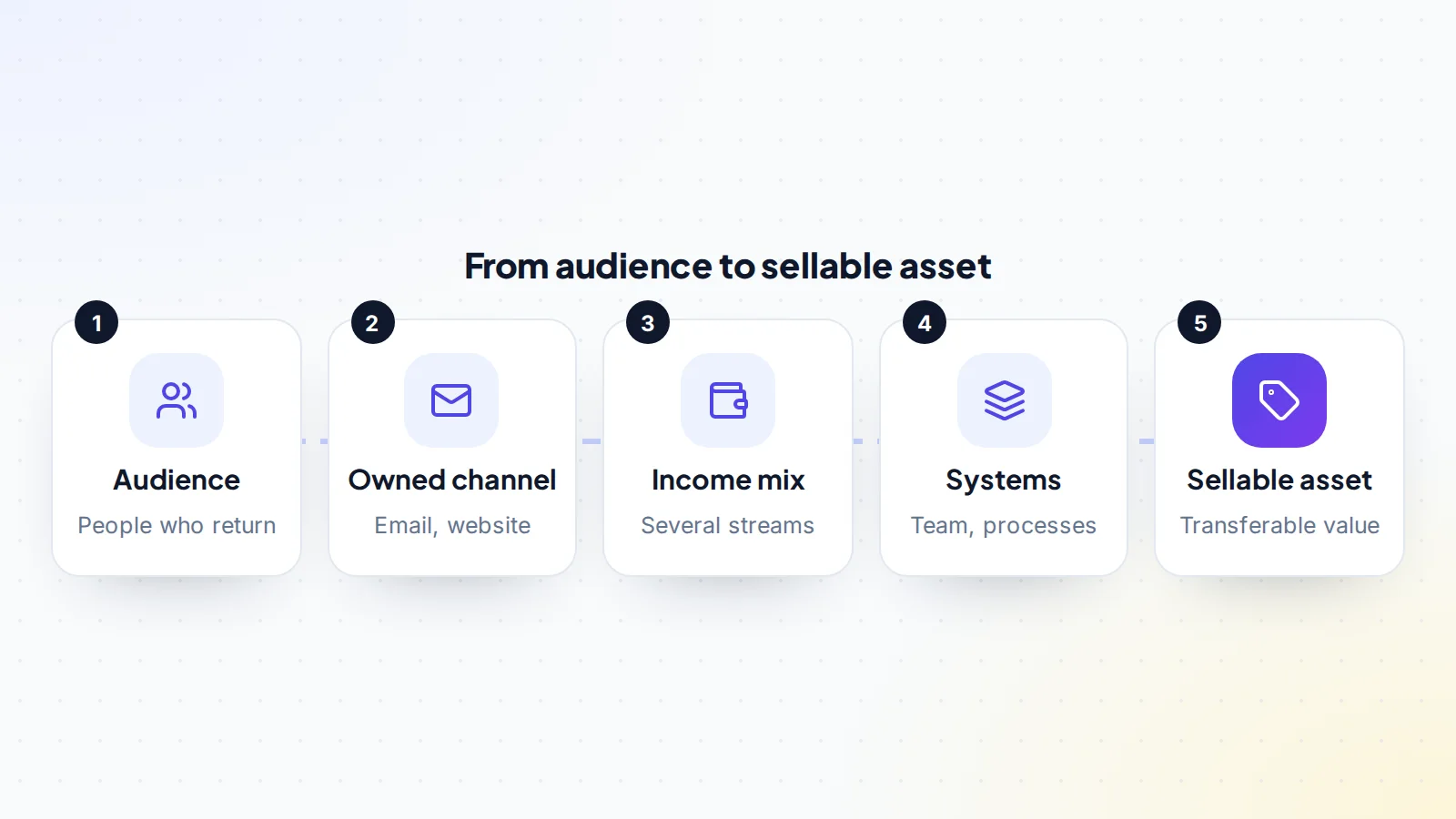
From side project to asset
Many creator businesses start as side projects: a channel about a hobby, a newsletter written on weekends, a template shop built in spare time. Not all grow into businesses, but those that build an audience and steady income can become valuable assets. Our guide to selling a side project explains how to tell when a project is ready to sell. For ideas about income that needs less day-to-day work, see our guide to passive income from online businesses.
Creators and commerce
A growing number of creators sell physical products, from merchandise to their own brands. An online store linked to a creator’s audience can be a strong business, and sometimes the store becomes more valuable than the channel that started it. Buyers interested in this side of the creator economy can read our guide to buying a Shopify store.
Numbers that matter
Follower counts are the most visible number in the creator economy, but rarely the most useful. When judging a creator business, look at views or reads per piece of content, engagement rates, email open and click rates, how many people buy products, and how income has moved over the last 12 months. These numbers show whether the audience is active and whether it spends, which is what turns attention into a business. Our guide to engagement rate explains how to compare audiences fairly.
Risks to understand
Creator businesses carry particular risks. Platform rules, algorithms and revenue programmes can change. Audiences can drift if content changes too quickly. Brand deals can end, and relationships may not pass to a new owner. And businesses that depend on one person can lose value if that person steps away. None of these make creator businesses bad investments, but each should be understood and reflected in planning and price. Spreading income, building owned channels and documenting how things work all reduce these risks over time.
A worked example
The details below are made up to show the method.
Ravi started a channel about budget home repairs as a hobby. Over four years, it grew to 300,000 subscribers, with income from YouTube’s Partner Program, affiliate links to tools, two brand partners and a downloadable repair guide. At first, every video featured Ravi.
Planning to sell eventually, Ravi builds an email list through the guide, hires an editor and a second presenter, and creates a consistent format and brand that viewers recognise beyond Ravi personally. Two years later, half the videos feature the second presenter, the email list has 40,000 subscribers, and both brand partners work with the brand rather than Ravi. When Ravi lists the business, buyers see a creator business that can keep running under new ownership, and the offers reflect that.
Creator economy: the checklist
- Income sources listed, with records for each.
- Platform programme requirements checked and current.
- Brand partnerships properly disclosed and documented.
- An owned channel, such as email, growing alongside platforms.
- Products and content rights confirmed.
- Workflows and team documented.
- A plan for how the business runs without one person.
- Handover process checked for each platform and asset.
Ready to find your next asset?
Browse listings with verified numbers, ask sellers your questions before you offer, and agree every step in a free Deal Room.
Frequently asked questions
What is the creator economy?
The people, platforms and businesses built around creating content and building audiences online, and the many ways creators earn from them.
How do creators make money?
Through platform revenue, brand deals, affiliate links, their own products, memberships and fan support, usually in combination.
Can a creator business be sold?
Yes. Channels, newsletters, courses, communities and complete creator businesses change hands, each with its own handover process.
What makes a creator business valuable to a buyer?
Verified profit, growth, diverse income, an owned audience, transferable brand partnerships and systems that don’t depend on one person.
Do platform monetization programmes transfer?
Requirements are set by each platform and often relate to the account holder, so check the current rules for each before a sale.
Why does disclosure matter?
The FTC says creators should clearly disclose brand relationships. It protects audience trust, which underpins brand income.
How can creators make their business easier to sell?
Build an email list, diversify income, document systems, bring in other people and build a brand beyond one face.