How to Negotiate When Buying an Online Business
A buyer's guide to negotiating an online business purchase: research and walk-away price, building a reasoned offer, counteroffers, trading terms such as earn-outs and support, using due diligence findings and closing through escrow.

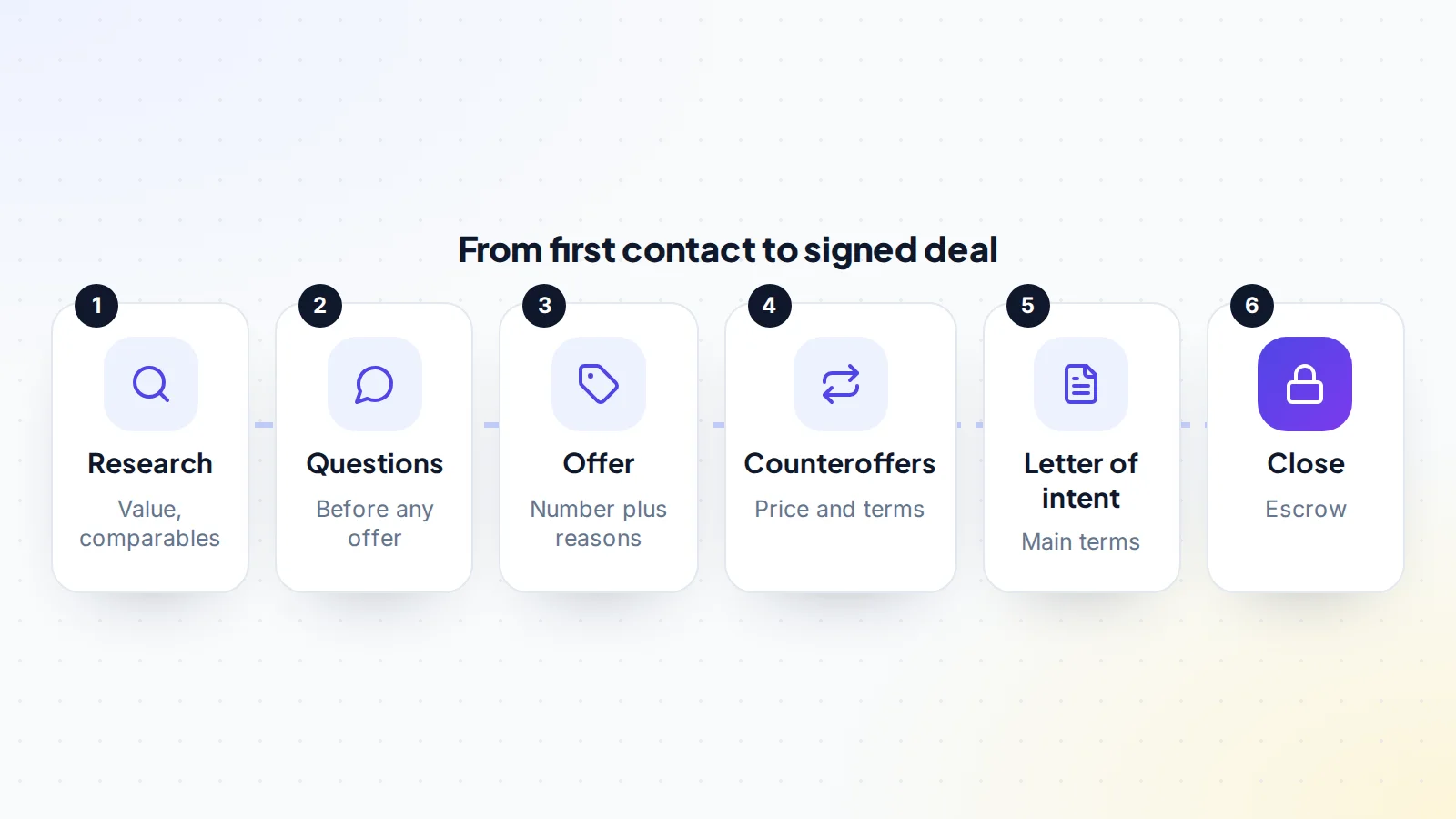
The asking price on a listing is where negotiation starts, not where it ends. Most online business sales involve some back and forth, and buyers who prepare well often reach a better price, better terms or both, without souring the relationship with the seller they’ll depend on during the handover. This guide explains how to negotiate business purchase terms step by step: preparing your numbers, making a reasoned offer, handling counteroffers, using terms as well as price, and closing safely.
Choosing where to buy affects how negotiation works; see marketplace vs broker. To understand the other side, read our guide to negotiating as a seller.
Key takeaways
- Research value and set a walk-away price before you make any offer.
- Ask your key questions first; offers based on evidence are stronger.
- Explain your offer with numbers the seller can follow.
- Negotiate terms too: payment timing, support, inclusions and protections.
- Agree terms in writing and close through escrow.
Why negotiation matters
Online businesses don’t have fixed prices. Sellers set asking prices based on their own view of value, sometimes optimistic, sometimes cautious. A buyer who understands the business and the market can often agree a price closer to fair value, and terms that reduce risk. Good negotiation isn’t about squeezing the seller; it’s about reaching a deal both sides are comfortable with, which makes the handover smoother and the relationship afterwards more helpful.
Prepare before you talk numbers
Preparation is where most of the value is won. Before you make an offer:
- Work out the business’s real monthly profit over the last 12 months.
- Look at comparable sales and listings of similar businesses.
- Estimate a fair multiple based on the business’s strengths and risks.
- Decide the most you’ll pay: your walk-away price.
- Know what else you need: support, an inspection period, specific assets.
A quick estimate from the free valuation tool or a website valuation calculator can help, but your own analysis of the evidence matters most.
Ask questions before offering
Offers made before you understand the business are weak: you’ll either overpay, or have to renegotiate later and lose the seller’s trust. Ask your key questions first: why the seller is selling, how revenue breaks down, how much time the business takes, what the risks are. Verify the main numbers at the source. The answers shape both your price and the terms you’ll ask for. Our guide to questions to ask when buying a business lists them by topic.
What you can negotiate
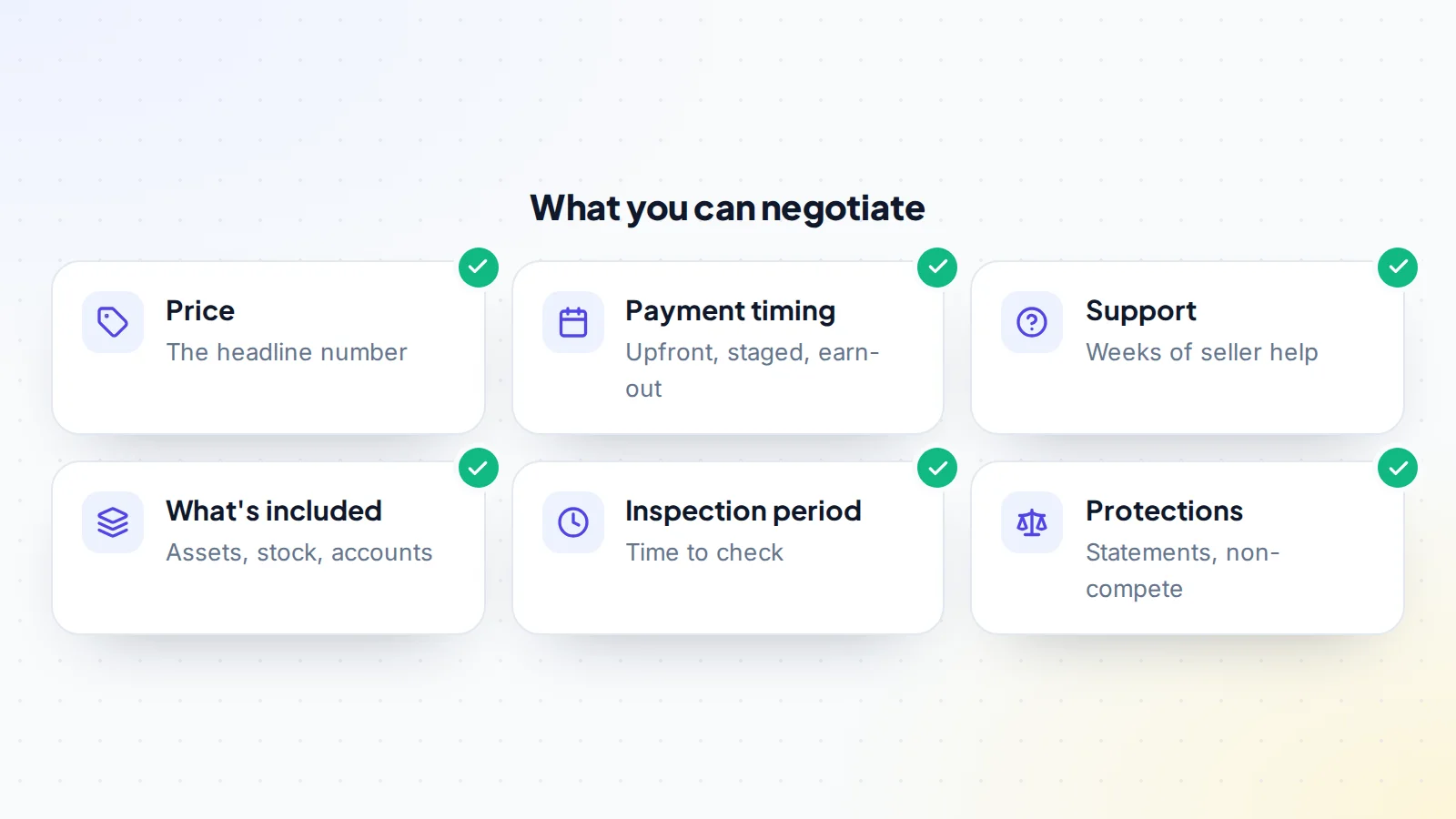
Price is the obvious lever, but there are others, and they often matter as much:
- Payment timing: all upfront, staged payments or an earn-out tied to results.
- Support: a few weeks of help from the seller, with clear hours.
- Inclusions: domains, social accounts, content, stock, tools and contacts.
- Inspection period: time after the handover to confirm everything works.
- Protections: written statements about revenue and ownership, and a non-compete.
- Fees: who pays escrow or middleman fees.
Trading these can bridge a gap on price. A seller who won’t move on the number might accept staged payments, or a buyer might pay closer to asking in exchange for a longer support period.
Making the first offer
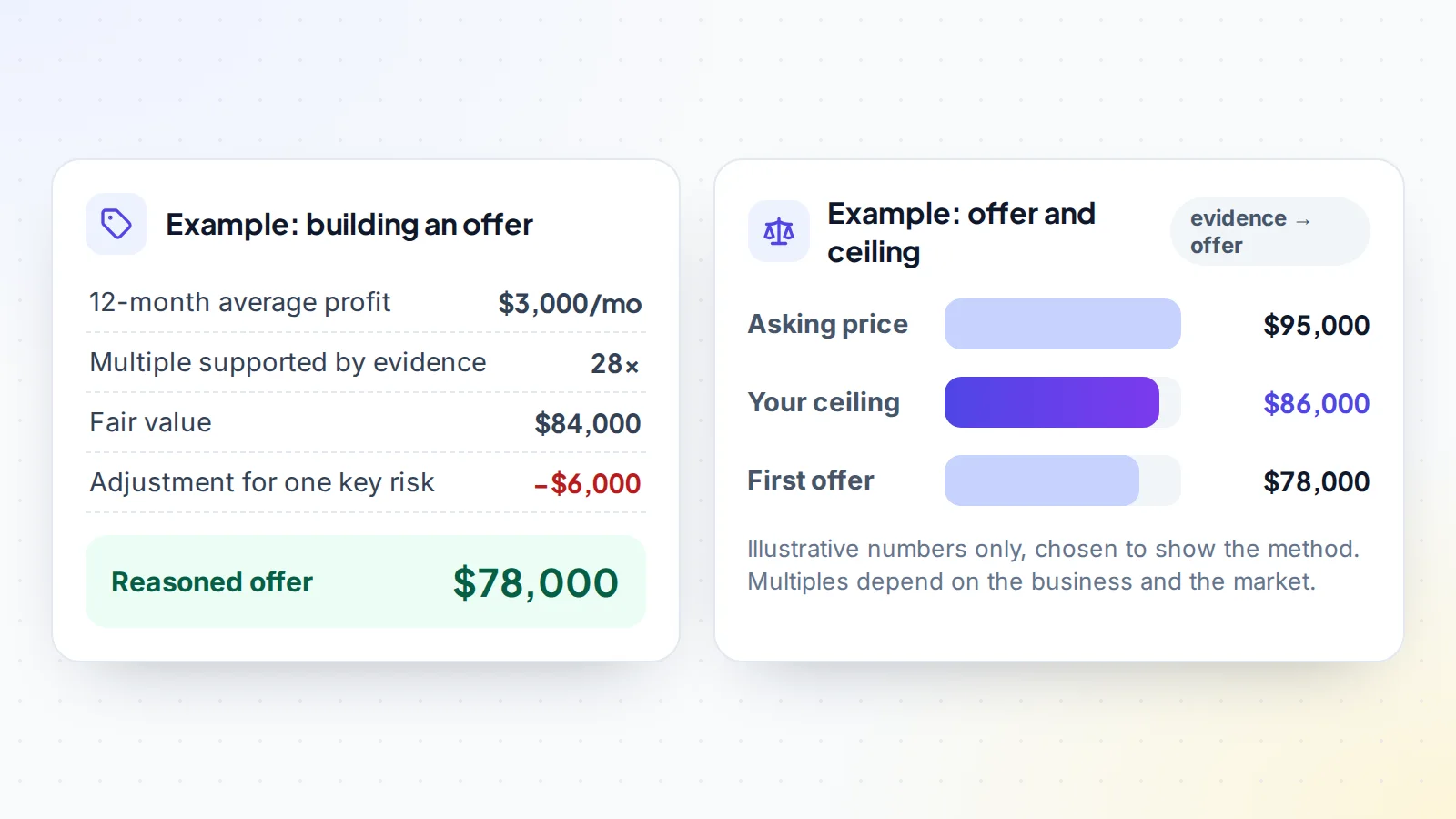
A good first offer is credible and explained. Start from the profit, apply the multiple you think the evidence supports, adjust for the specific risks you found, and state the result with your reasoning. For example: “Based on average monthly profit of $3,000 and the traffic concentration in two pages, I’d like to offer $78,000.” Sellers find a reasoned offer easier to accept, or at least to counter sensibly, than a bare low number.
Avoid offers so low they seem insulting; they can end the conversation before it starts. Leave room to move, but stay within sight of fair value. If you’re unsure, it’s better to open slightly higher with strong reasons than very low with none, because the reasons carry the conversation.
How offers work on digiflippers.com
On digiflippers.com, offers are made and answered on the listing, so there’s a clear record. An offer stays open for 72 hours, offers can’t go below 30% of the asking price, and buyer and seller can go back and forth for up to 6 rounds. Read how it works for the full process, or browse businesses for sale.
Handling counteroffers
Expect a counteroffer. When it comes, respond in small, reasoned steps, linking each move to something specific: new information, a change in terms, or a compromise on a risk. Don’t raise your offer twice without a response from the seller. If you’re far apart, say so honestly and explain what would need to change, for example a lower price or a staged payment, for the deal to work for you.
Listen to the seller’s reasons too. Sometimes a seller’s counter is based on information you don’t have yet, such as a new contract or a seasonal pattern, and it may change your view of value.
Auctions and fixed prices
The way a business is listed affects negotiation. With a fixed asking price, there’s usually room for offers. With an auction, the format sets the rules: bids, deadlines and reserve prices. Some sellers accept offers before an auction ends. Our guide to auction vs fixed price explains how each works and how to approach them as a buyer.
Using due diligence findings
Many deals agree a price subject to due diligence. If due diligence uncovers something new, such as lower profit, a missing asset or a risk the listing didn’t mention, it’s reasonable to revisit the price or terms. Explain the finding, show the evidence and propose a specific change. If due diligence confirms what the seller said, honour the agreed price; renegotiating without a reason damages trust.
When other buyers are interested
Popular listings attract several buyers. Sellers may mention other offers, sometimes to encourage a quicker decision. Don’t let that push you past your walk-away price. Instead, make your offer stand out in other ways: verified funds, a clear timeline, flexibility on handover dates, or fewer conditions. Many sellers value certainty and a smooth process as much as a slightly higher number. If you lose a deal to a higher bid you weren’t willing to match, that’s usually the right outcome.
Put it in a letter of intent
Once you agree the main points, write them down in a letter of intent: price, payment structure, what’s included, timeline, due diligence period, support and any key conditions. It doesn’t need to be long, but it avoids misunderstandings. Our guide to the letter of intent explains what to include.
Negotiating through a broker
When a broker represents the seller, you’ll usually negotiate with the broker rather than the seller directly. Brokers know the market and want the deal to close, but they work for the seller and are often paid a share of the price. Be just as prepared: bring your evidence, explain your reasoning and ask for direct conversations with the seller where appropriate, especially about operations and support. A good broker passes on reasoned offers and helps both sides find a workable middle.
Tips for first-time buyers
If it’s your first purchase, start with a smaller business where mistakes cost less. Lean on structure: a clear list of questions, a written walk-away price, an inspection period and escrow. Don’t feel you have to win every point; focus on the things that matter most to you, such as accurate numbers, a clean handover and some support. When you negotiate business purchase terms for the first time, being organised and polite goes a long way, and sellers often appreciate a buyer who’s clearly careful.
Timing and momentum
Deals have momentum. Long gaps between messages can cool a seller’s interest, and other buyers may appear. Reply promptly, keep each round focused, and set clear expectations about how long due diligence will take. At the same time, don’t let urgency push you past your walk-away price; a seller’s deadline is their concern, not a reason to skip checks.
Factor in costs and fees
Remember the costs that sit around the price: escrow or middleman fees, legal or accounting help, transfer costs and any tools you’ll need. Some of these can be shared or negotiated. Sellers think about their costs too, such as any marketplace commission; our guide to the success fee explains how sellers see this. Knowing what each side takes home can help you find a price that works for both.
Tone and relationship
You’ll depend on the seller during the handover and the support period, so keep negotiation respectful. Be clear, calm and specific. Acknowledge the work the seller has put into the business. Avoid pressure tactics, false deadlines or claims you can’t back up. Sellers often choose the buyer they trust over a slightly higher offer from someone who seems difficult. A friendly, professional tone also makes it easier to ask for help later, when you’re running the business and have questions only the seller can answer.
Knowing when to walk away
Your walk-away price exists for a reason. If the seller won’t come within it, or if important questions go unanswered, it’s better to walk away than to overpay or take on hidden risk. Do it politely, and leave the door open; sellers sometimes come back weeks later, especially after other buyers have checked the same numbers. Our guide to chargeback risk is a reminder that some risks, such as payment method, are about how you pay as well as how much.
Closing safely
Once terms are agreed, pay through escrow or a middleman, so the money is held until the handover is complete. On digiflippers.com, the ways to pay in a deal are: directly to the seller, through escrow, and the platform never holds the money itself. Follow the agreed handover plan, use the inspection period to check everything, and release the payment only when you’re satisfied.
Common mistakes
- Making an offer before understanding the business.
- Offering a number with no explanation.
- Negotiating price only, ignoring terms.
- Renegotiating after due diligence without a real reason.
- Going over your walk-away price in the heat of the moment.
- Paying outside escrow to “save fees”.
A worked example
The details below are made up to show the method.
Alex is interested in a gardening content site listed at $95,000, earning about $3,000 a month in profit. After asking questions and checking the numbers, Alex finds that two pages bring 40% of income. Comparable sites suggest a multiple around 28 times monthly profit, or $84,000, before risks. Alex sets a walk-away price of $86,000 and offers $78,000, explaining the concentration risk.
The seller counters at $90,000, pointing to a new affiliate partnership. Alex verifies it and moves to $82,000, asking for six weeks of support. The seller agrees to $84,000 with eight weeks of support and the escrow fee split in half. They sign a letter of intent, due diligence confirms the numbers, and the deal closes through escrow.
Negotiate business purchase terms: the checklist
- Profit, comparables and a fair multiple researched.
- Walk-away price set before the first offer.
- Key questions asked and main numbers verified.
- First offer explained with reasons.
- Terms negotiated as well as price.
- Counteroffers answered in small, reasoned steps.
- Agreed terms written into a letter of intent.
- Payment through escrow or a middleman.
Ready to find your next asset?
Browse listings with verified numbers, ask sellers your questions before you offer, and agree every step in a free Deal Room.
Frequently asked questions
How much below asking should I offer?
There’s no fixed rule. Base your offer on profit, a fair multiple and the risks you found, and explain it.
Should I ask questions before making an offer?
Yes. Offers based on evidence are stronger and avoid renegotiating later.
What can I negotiate besides price?
Payment timing, support, what’s included, the inspection period, protections and who pays fees.
Is it fair to renegotiate after due diligence?
Only if due diligence reveals something new. Explain the finding and propose a specific change.
How do I handle a counteroffer?
Move in small, reasoned steps, and link each move to new information or a change in terms.
When should I walk away?
When the seller won’t come within your walk-away price or won’t answer important questions.
How should I pay once we agree?
Through escrow or a middleman, released after the handover and inspection period.