Owner Time Commitment and Why It Changes the Multiple
Why buyers pay less for businesses that need lots of the owner's time, how to log and price owner hours, and practical ways to reduce them before you sell.

Two online businesses each make $5,000 a month in profit. One needs five hours of the owner’s time each week; the other needs thirty. They aren’t worth the same, and most buyers know it. Owner hours valuation is the idea that the time a business needs is a real cost, even when it doesn’t appear in the accounts. This guide explains how time changes the price, how to measure it honestly and what sellers can do to reduce it before they sell.
It’s useful for sellers preparing to list and for buyers checking a listing. For the full valuation method, see our guide to online business valuation.
Key takeaways
- The owner’s time is a cost: buyers either do the work themselves or pay someone to do it.
- Many buyers subtract the cost of replacing owner hours from profit, or lower the multiple.
- Log hours honestly by task for at least a month before listing.
- Written procedures, help and automation reduce hours and owner dependence.
- A business that runs without its founder is usually worth more, even at the same profit.
Why time changes the price
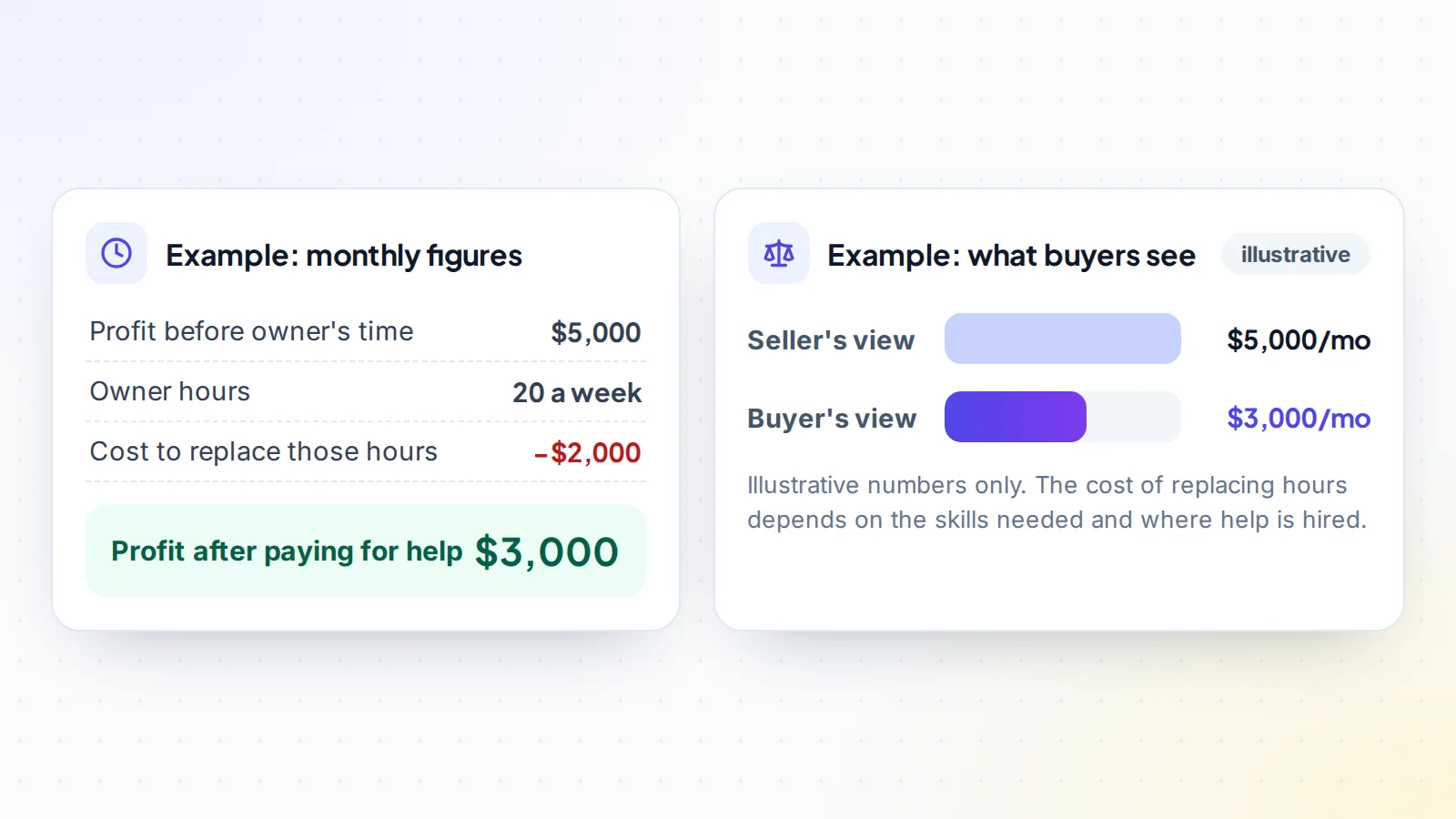
Most online businesses are valued as a multiple of average monthly net profit. But “profit” usually means profit before the owner pays themselves. If the business needs thirty hours a week, a buyer either works those hours, giving up time they could spend elsewhere, or hires someone, which reduces profit. Either way, the business is worth less to them than one producing the same profit with a few hours a week.
Time also signals risk, and risk is what the multiple measures. A business that relies heavily on one person’s skills, relationships and memory is harder to hand over. Buyers worry that results will fall once the seller leaves, and they price that in.
How buyers price owner hours
Buyers usually handle time in one of two ways, sometimes both:
- Subtract the cost of help. They estimate what it would cost to pay someone for the owner’s hours and subtract it from profit before applying the multiple.
- Lower the multiple. They keep the profit figure but apply a lower multiple to reflect the work and the dependence on the owner.
The cost of help depends on the skills involved. Answering routine emails costs less than writing expert content, managing ad budgets or maintaining code. A careful buyer breaks the hours down by task and prices each one.
Measuring hours honestly
Sellers often underestimate their hours, because small tasks scattered through the day don’t feel like work. Buyers often overestimate them, to be safe. The best answer is a log. For at least a month before listing, record the time spent each week by type of task.
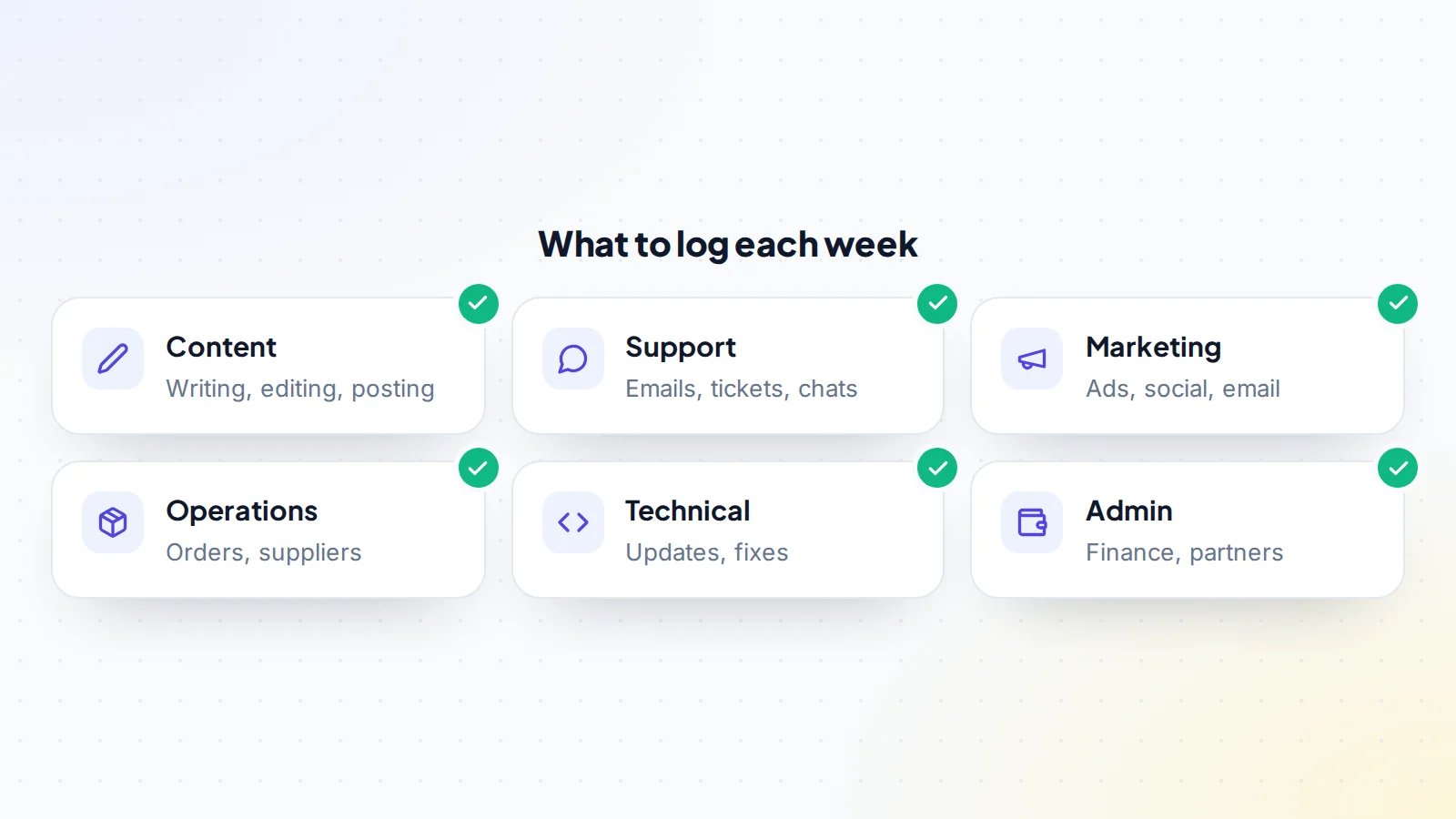
Include the irregular work too: a supplier problem, a site update, a seasonal campaign, the yearly tax paperwork. Average it over the year, and note the busiest weeks separately so a buyer knows what peak periods look like. Then note which tasks need special skills and which could be handed to a freelancer or virtual assistant.
Typical work by business type
- Content sites: research, writing, editing, updating old articles, link outreach and partner management. Much of it can be delegated to writers and editors.
- E-commerce stores: supplier management, orders, customer service, ads and product research. Fulfilment partners and assistants can take a lot of it.
- SaaS and apps: development, bug fixes, customer support and billing questions. Technical work is the hardest and most expensive to replace.
- Social accounts and communities: content creation, posting, replies and moderation. Work tied to a personal brand is the hardest to hand over.
- Digital products: product updates, support and marketing launches, often in bursts.
Knowing the typical work for a business type helps both sides check whether a stated figure is realistic.
Pricing the seller’s skills
Not all hours cost the same to replace. An hour of email triage might be handled by an assistant; an hour of expert writing, technical development or negotiation with partners needs a specialist. When you estimate the cost of help, price each kind of work at what it would actually cost to hire. A seller with rare skills may be running a business that looks low-effort to them but would be expensive for anyone else to run. Good owner hours valuation reflects that difference rather than averaging it away.
Owner dependence beyond hours
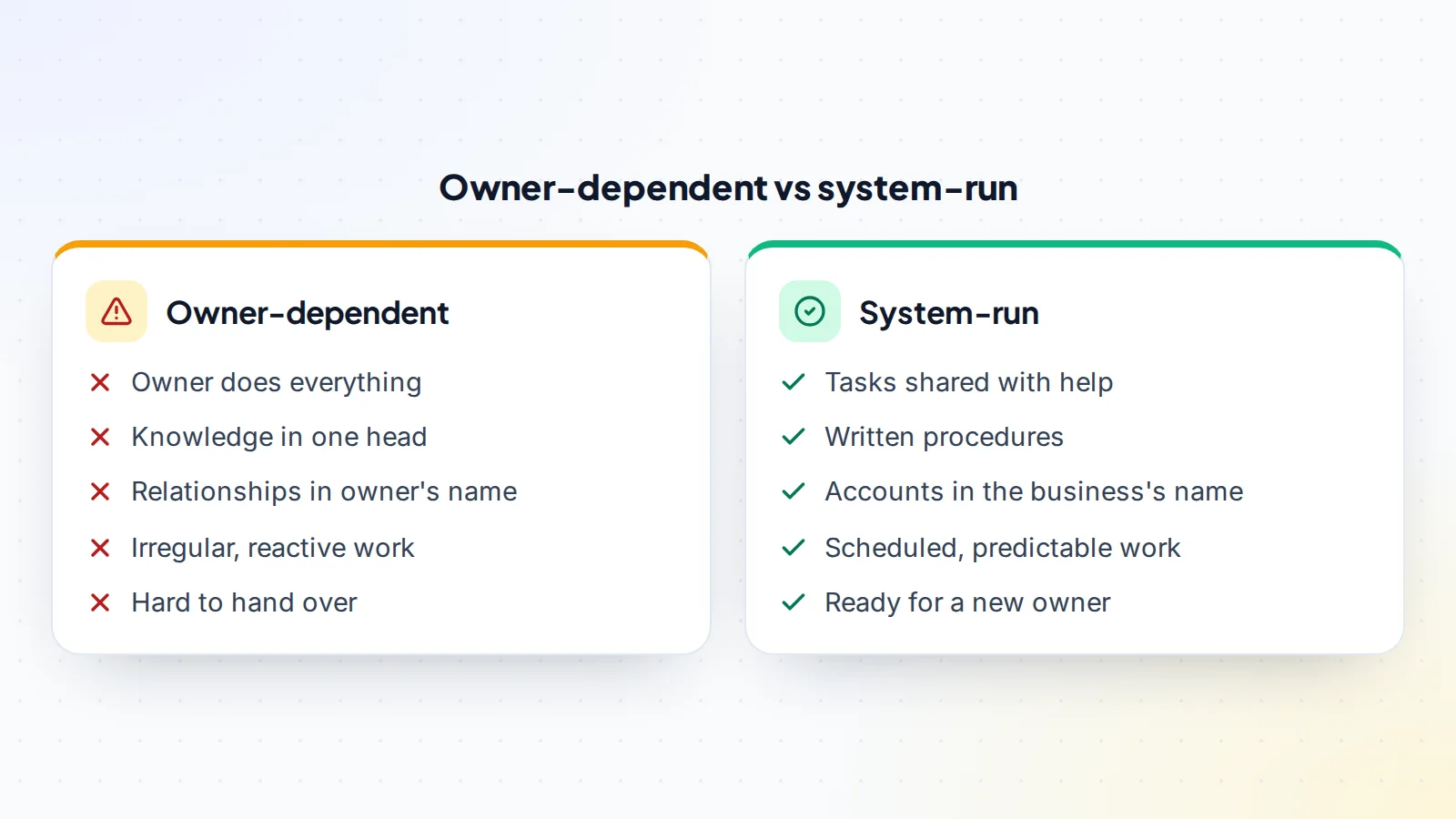
Hours aren’t the only measure. Some businesses need few hours but depend heavily on the owner in other ways:
- The owner’s face, voice or name is the brand.
- Key partners, sponsors or suppliers deal only with the owner personally.
- Important knowledge, such as how a process works or why something was built a certain way, isn’t written down.
- Accounts are in the owner’s personal name.
Each of these makes a handover harder, and buyers discount accordingly. Our guide to revenue diversification covers the income side of the same problem.
How sellers can reduce hours
- Write procedures for every recurring task: what to do, which tools to use and what good looks like.
- Delegate routine tasks to freelancers or assistants, and include their cost in your profit figures.
- Automate repetitive work: scheduled posts, email sequences, order processing, support templates.
- Simplify: drop low-value products, channels or tasks that take time but add little.
- Move relationships to a business email and introduce team members to key partners.
- Batch work into predictable blocks, so the business has a rhythm a new owner can follow.
Start months before selling, so buyers see several months of results with fewer hours. A change made the week before listing won’t convince anyone; six months of steady results with help in place will. Our guide to increasing business value before a sale has more ideas.
Hours and the right buyer
Not every buyer sees hours the same way. Some want an investment that runs with little involvement and will pay more for a business with systems and staff in place. Others are looking for a business to work in themselves, often with skills that match it, and see the hours as a job they’re happy to take on. For them, a business that needs more time can be good value, because they won’t be paying someone else. Knowing which kind of buyer you’re likely to attract helps sellers describe the work honestly and helps buyers judge whether the hours suit them.
Tools that save time
Many hours disappear into tasks that tools can handle: scheduling posts and emails, answering common questions with saved replies or a help centre, processing orders automatically, reconciling payments and sending reminders. Before listing, review which tools the business already uses and which would save the most time. Include their costs in your profit figures, and make sure the accounts can move to a buyer. A clear list of tools and what each one does is part of a good handover.
Be honest in the listing
State your weekly hours, how they break down and what help you use. If you’ve reduced them recently, say when and show the results since. Buyers check: they’ll ask about your typical week, look at support volumes and content output, and talk to contractors. An honest, specific figure earns trust; a figure that’s later found to be too low damages it and invites a lower offer. If your hours vary a lot, give the range and explain what drives it.
For buyers: checking the real workload
- Ask for a typical week, broken down by task, and how it changes through the year.
- Check support ticket volumes, content calendars and order counts against the stated hours.
- Ask who else helps, how much they’re paid and whether they’ll stay.
- Ask which tasks only the seller can do today, and why.
- Price the hours you’ll need to cover yourself or pay for.
The myth of the passive business
Listings sometimes describe businesses as “passive”. Very few are. Content sites need fresh content and updates, stores need orders and suppliers managed, apps need maintenance and support. A business that runs with a few hours a week and good systems is achievable, but it’s the result of work done earlier, not an absence of work. Price on the hours a business really needs, not on the word in the title. Our guide to pre-revenue valuation covers businesses that are earlier in that journey.
Hiring help after you buy
Buyers who plan to replace the seller’s hours usually hire freelancers or agencies first. Agree clear tasks, deliverables and rates, and keep contracts in the business’s name. If you hire people regularly, check how the relationship should be treated where you are. In the US, for example, the IRS explains that whether a worker is an independent contractor or an employee depends on factors such as behavioural control, financial control and the type of relationship, not just on what the contract calls them. Getting this right early avoids problems later.
Transition support and hours
Agreed support from the seller after the sale helps a buyer learn the work and decide what to keep, delegate or drop. Write the hours, length and type of support into the agreement. It’s also a useful test: if the business can’t be explained in a few weeks of handover calls and written procedures, it probably depends too heavily on the seller. Our guide to transition support after a sale covers what’s normal.
Common mistakes
- Quoting hours from the quietest month of the year.
- Leaving out time spent on partners, finances or problems.
- Calling a business passive when it needs regular work.
- Counting profit without paying for help the business relies on.
- Ignoring the specialist skills some tasks need.
A worked example
The numbers below are made up to show the method.
A content site makes $5,000 a month before the owner’s time. The owner logs 20 hours a week: writing, editing, email and partnerships. A buyer estimates that hiring a writer and an assistant for that work would cost about $2,000 a month, so they value the site on $3,000 a month of profit.
Six months before selling, a different owner of a similar site hires a freelance writer, writes procedures and automates email. Their own hours fall to five a week, and profit after paying the writer is $4,000. Buyers see a site that’s already run by a system, and offers come in on the $4,000 figure at a higher multiple.
Verification and trust
Claims about hours are hard to prove, but you can support them. Show invoices from contractors, the procedures they follow and the tools that automate work. On digiflippers.com, sellers can verify their profile and key numbers, so buyers can see what’s been checked. The valuation tool lets you see how hours affect an estimate.
Owner hours valuation: the checklist
- Hours logged by task for at least a month.
- Irregular and seasonal work averaged over the year.
- Tasks needing special skills identified.
- Cost of replacing hours estimated.
- Procedures written for recurring tasks.
- Routine work delegated or automated.
- Relationships and accounts moved to the business.
- Hours stated honestly in the listing, with evidence.
Ready to find your next asset?
Browse listings with verified numbers, ask sellers your questions before you offer, and agree every step in a free Deal Room.
Frequently asked questions
Why do owner hours affect valuation?
Because the buyer either does the work or pays for it. Time is a real cost even when it isn’t in the accounts, and heavy dependence on one person adds risk.
How do buyers account for owner hours?
By subtracting the cost of help from profit, lowering the multiple, or both.
How should I measure my hours?
Log time by task each week for at least a month, include irregular work, and average it over the year.
Does a passive business really exist?
Few are truly passive. Businesses with good systems can run on a few hours a week, but they still need someone to run them.
How can I reduce my hours before selling?
Write procedures, delegate routine work, automate repetitive tasks, simplify and move relationships to the business.
Should I include contractors’ costs in profit?
Yes. Show profit after paying for help, and buyers can see exactly what the business needs to run.
How does owner hours valuation work in practice?
Buyers estimate what the owner’s hours would cost to replace, subtract that from profit or lower the multiple, and apply the result to the business’s profit.